


2026.10.13
Others Plant science StoryThree-Dimensional Structure of 2HDH, a Dehydratase Involved in Flavone C-Glucoside Biosynthesis Associated with Blue Flower Coloration, Elucidated
— Findings Presented at the 43rd Annual Meeting of the Japanese Society for Plant Biotechnology —
Suntory Global Innovation Center Ltd. (SIC) has elucidated the three-dimensional structure of 2-hydroxynaringenin 6-C-glucoside dehydratase (2HDH), an enzyme involved in the biosynthesis of flavone C-glucosides associated with blue flower coloration. SIC also confirmed the production of flavone C-glucosides and a shift in flower color toward blue in petunia after introducing four genes, including 2HDH. The findings were presented at the 43rd Annual Meeting of the Japanese Society for Plant Biotechnology in Tottori, Japan.
Background
Flavone C-glucosides are found in many plants and perform diverse functions, including copigmentation in blue flowers. Multiple biosynthetic pathways for these compounds are known.
In the Caryophyllaceae family, flavone C-glucosides such as isovitexin are produced from naringenin via 2-hydroxynaringenin (2HN) and 2-hydroxynaringenin 6-C-glucoside (2HN6CG), followed by the action of 2-hydroxynaringenin 6-C-glucoside dehydratase (2HDH).
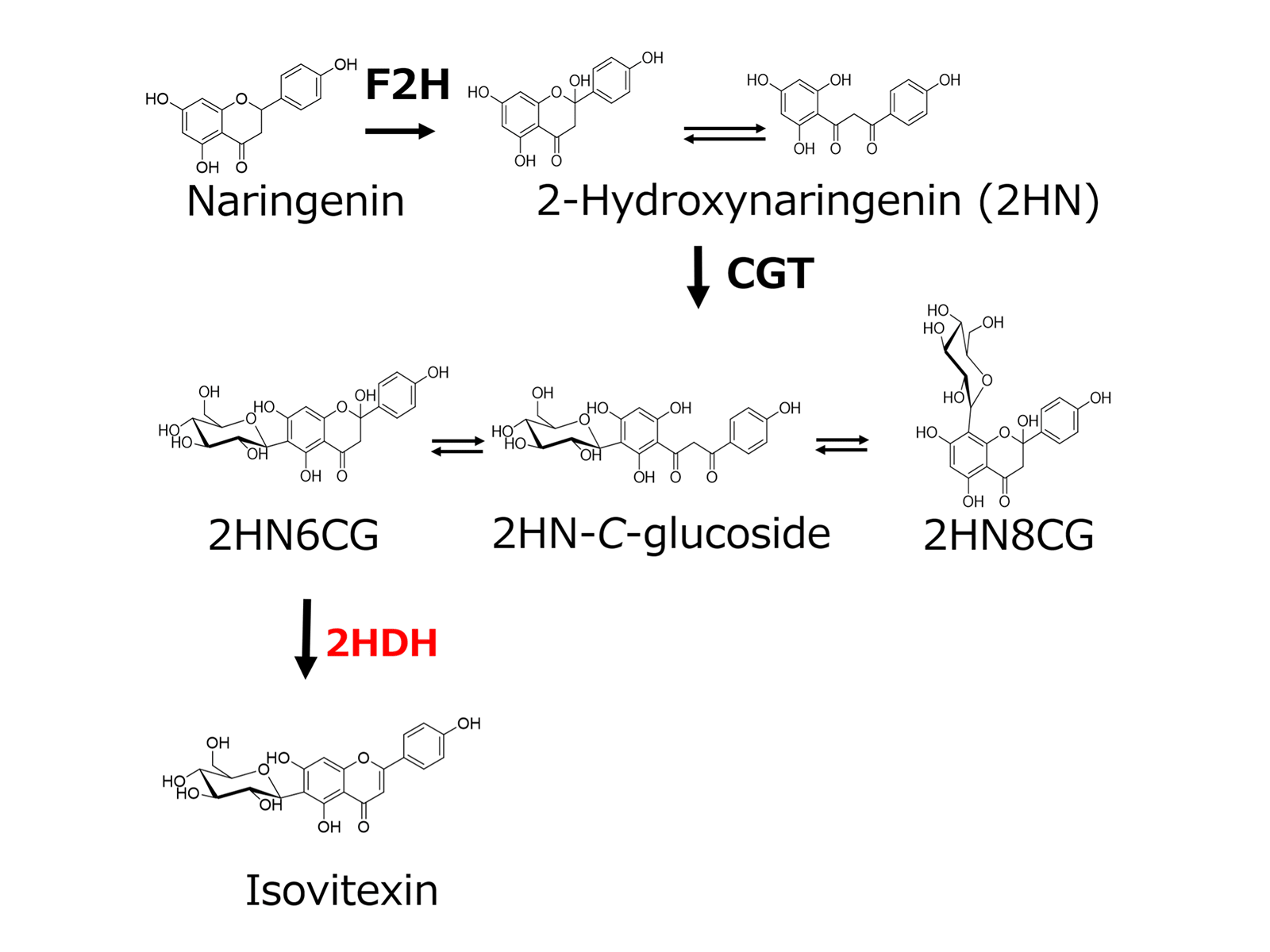
At the 2024 annual meeting, SIC reported the cloning of 2HDH genes from Dianthus, carnation, Silene and Heliosperma. However, the three-dimensional structure of the enzyme had not been clarified. In this study, the researchers analyzed the structure of 2HDH and examined whether the gene could also function when introduced into a different plant species.
Research Findings
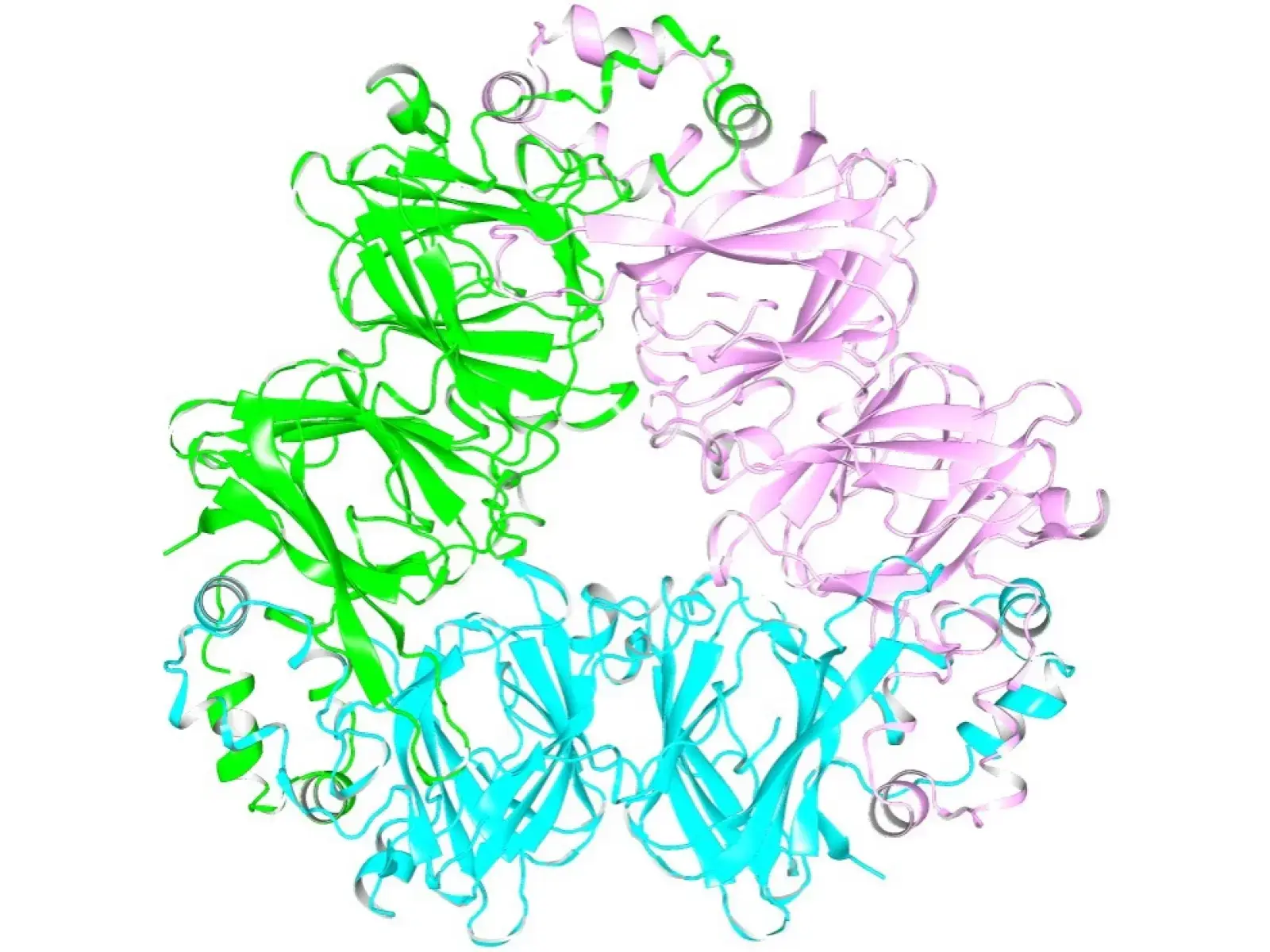
First, crystals of recombinant Silene 2HDH expressed in Escherichia coli were analyzed by X-ray crystallography. The analysis revealed that 2HDH is a bicupin protein containing two barrel-shaped cupin domains and forms a homotrimer. Although many cupin proteins contain metal ions, none were detected in 2HDH. Its primary and three-dimensional structures were also found to resemble those of 7S globulins, which are seed storage proteins.
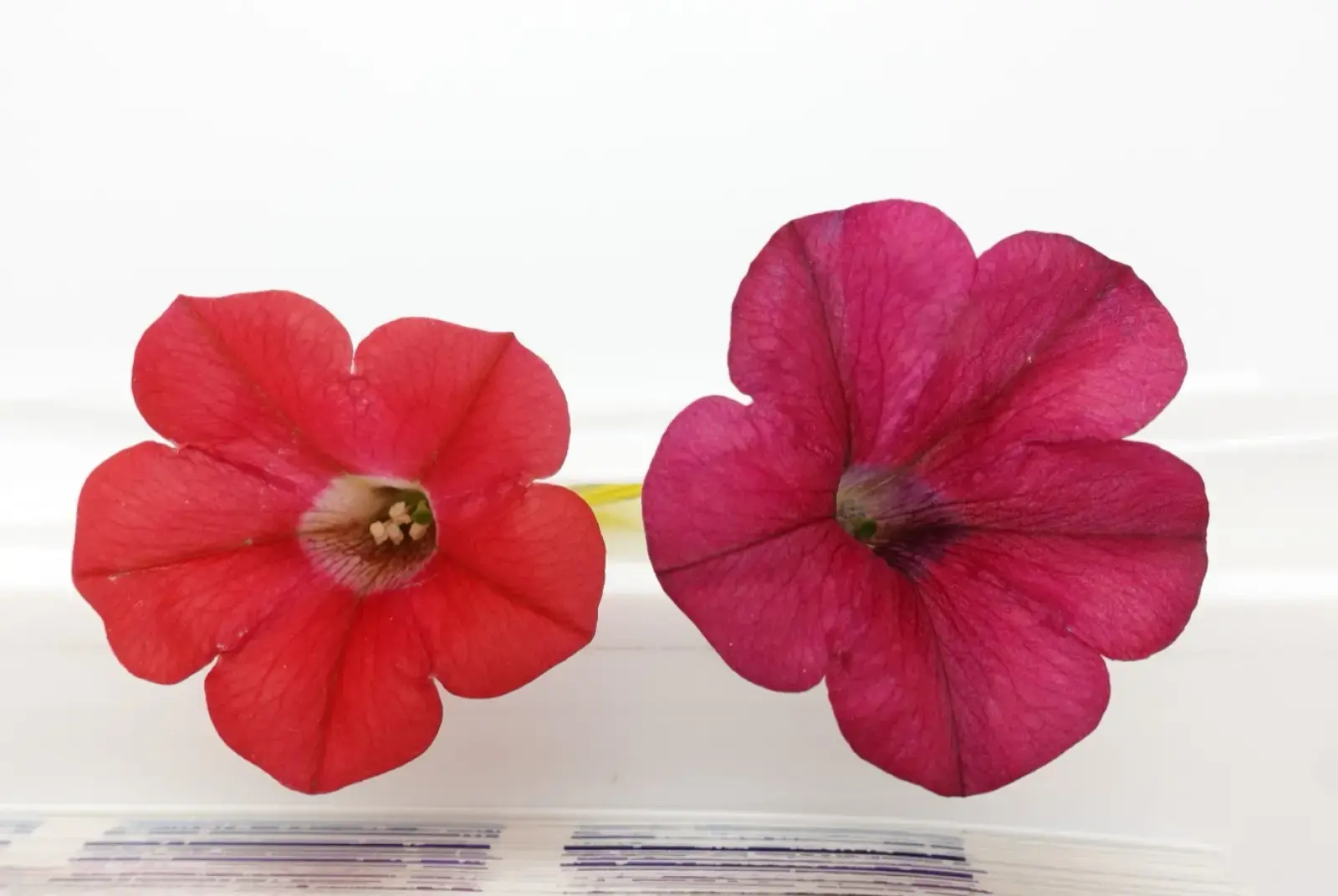
Next, to test whether 2HDH could function in a different plant, the researchers introduced four genes into petunia: genes encoding flavanone 2-hydroxylase from licorice (Glycyrrhiza), 2HN 6-C-glucosyltransferase (CGT) from buckwheat (Fagopyrum), and 2HDH from carnation, together with a flavonoid 3′,5′-hydroxylase gene from Campanula to enable the production of delphinidin-based anthocyanins required for blue coloration.
Flavone C-glucosides, including isovitexin, were detected in the petals of the transgenic petunias, and the flower color shifted toward blue through interaction with anthocyanins. These results show that the 2HDH gene can function in a different plant species and suggest its potential application to flower color modification.
Significance and Future Perspectives
Understanding the diversity of flower colors and creating new flower colors requires deeper knowledge not only of pigments such as anthocyanins, but also of compounds that work together with them, including flavone C-glucosides, and the mechanisms by which those compounds are biosynthesized.
In this study, SIC elucidated the three-dimensional structure of 2HDH and confirmed that flavone C-glucosides can be produced and flower color can shift toward blue when the relevant genes are introduced into a different plant. Notably, 2HDH closely resembles the seed storage protein 7S globulin, suggesting that plants in the Caryophyllaceae family may have acquired 2HDH from a pre-existing 7S globulin-like protein during evolution.
Going forward, SIC will investigate the reaction mechanism of 2HDH based on the newly determined structure and explore its application to flower color modification in other plants. Through this fundamental research, SIC aims to deepen understanding of flavone C-glucoside biosynthesis and the mechanisms of flower color formation, contributing to the creation of new flower colors and the further advancement of plant science.
Researcher's Perspective
“The structural determination of 2HDH, an enzyme involved in flavone C-glucoside biosynthesis, suggests that 2HDH may have evolved from a 7S globulin, a seed storage protein. Plants contain numerous homologs whose enzymatic functions have yet to be revealed. The successful introduction of the flavone C-glucoside biosynthetic pathway into transgenic petunias paves the way for metabolic engineering to confer novel traits, such as new flower coloration.”
— Yoshikazu Tanaka, Suntory Global Innovation Center Ltd.
Presentation Details
Conference:
The 43rd Annual Meeting of the Japanese Society for Plant Biotechnology
Dates:
September 4–6, 2026
Venue:
Torigin Bunka Kaikan and Tottori Civic Hall, Tottori, Japan
Presentation Title:
Structural analysis of 2-hydroxynaringenin 6-C-glucoside dehydratase involved in Caryophyllaceae-specific flavone C-glucoside biosynthetic pathway and its expression in Petunia hybrida
Authors:
Yoshikazu Tanaka¹, Noriko Nakamura¹, Rikako Makishima¹, Kazutaka Murayama²
Affiliations:
¹ Suntory Global Innovation Center Ltd.
² Tohoku University
We share the latest news, announcements, and day-to-day activities at SIC. If you are interested, please follow our page to stay updated.
[Suntory Global Innovation Center Official LinkedIn]


