


2026.10.15
Cutting-edge health innovations Health science StoryMaking Everyday Water Intake Easier to Assess
— Development and Evaluation of a Simplified Questionnaire for Estimating Habitual Water Intake in Japanese Adults Presented at an International Congress —
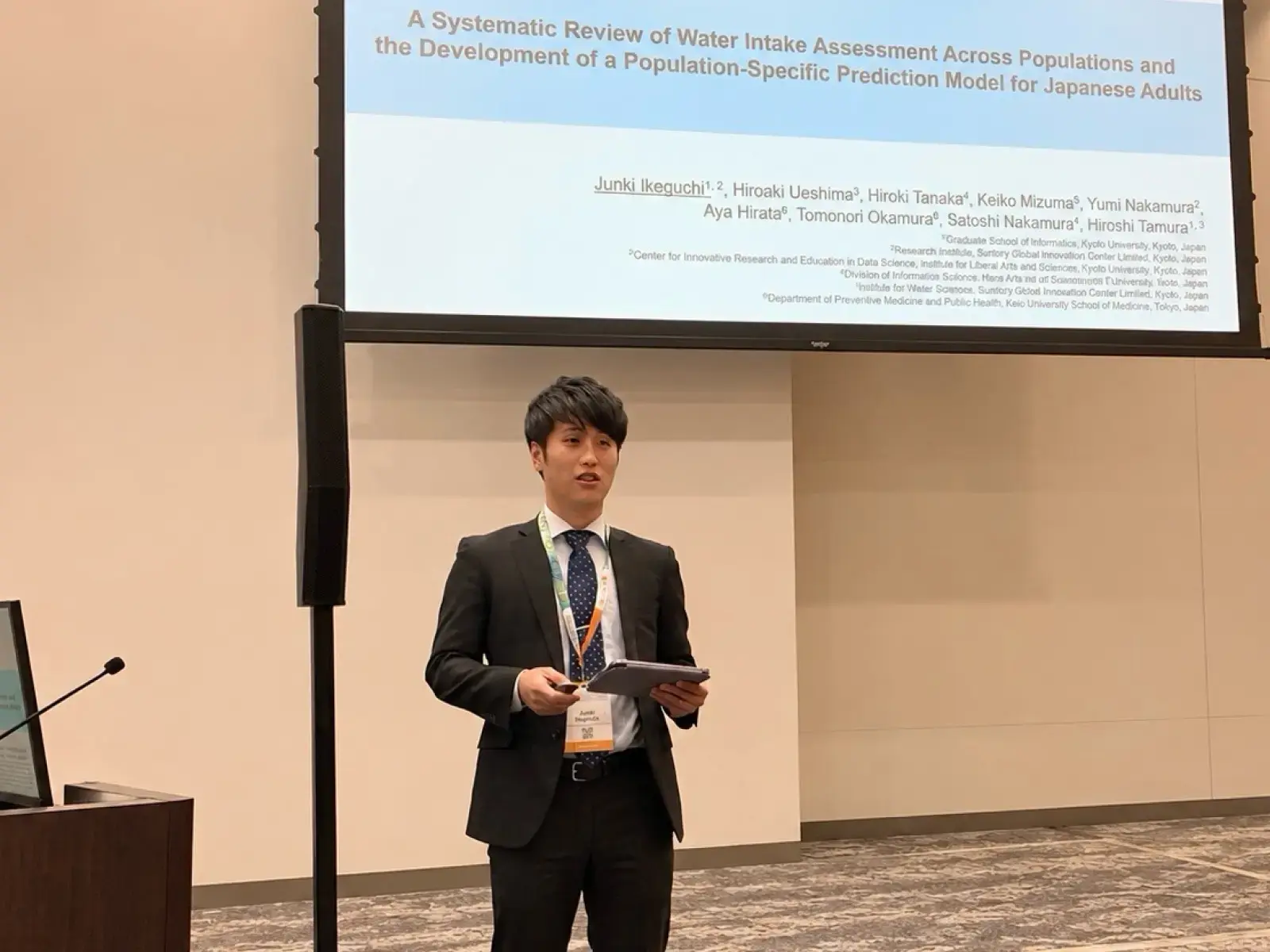
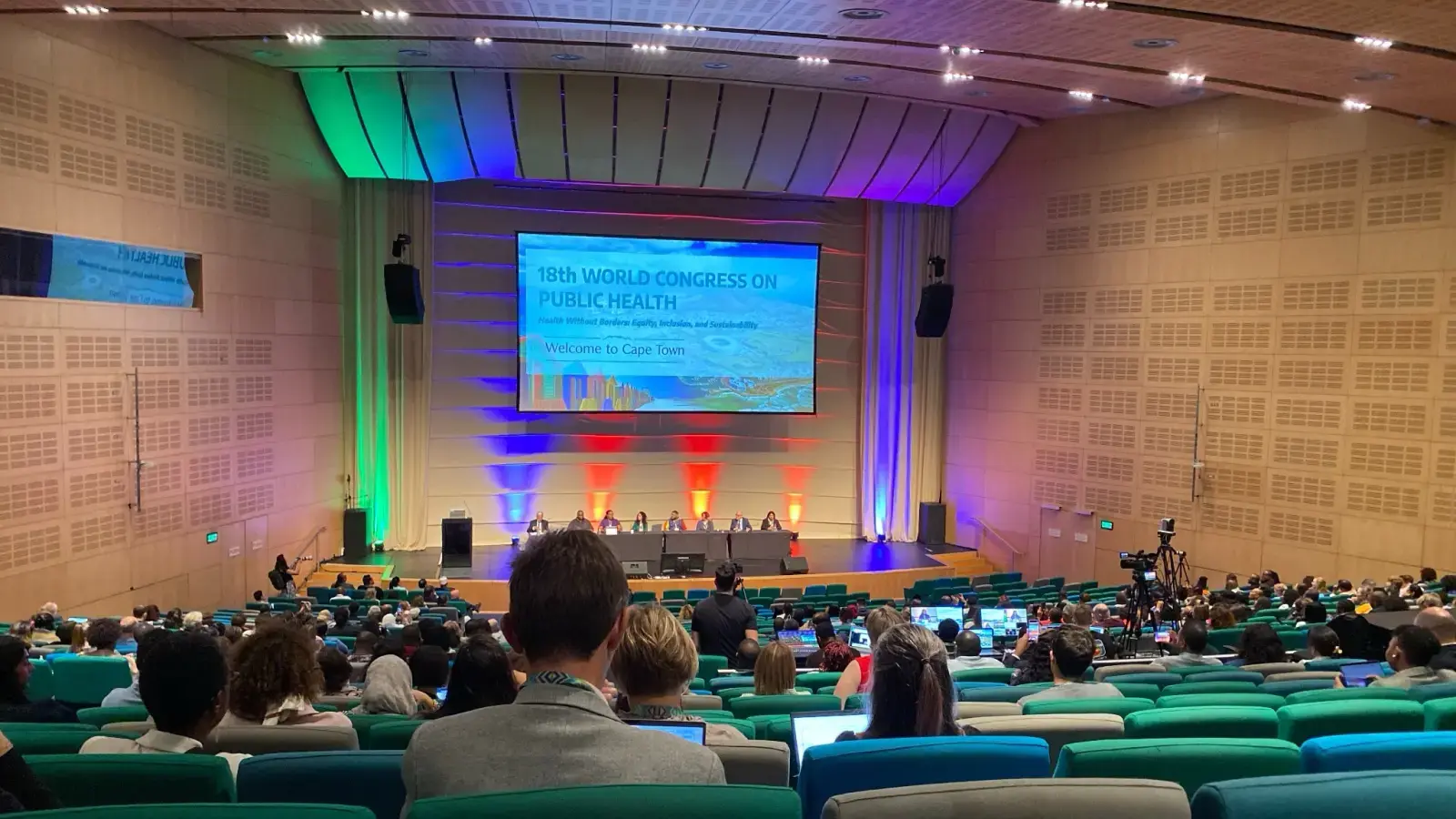
Suntory Global Innovation Center Ltd. (SIC) is advancing research on the development and evaluation of a simplified questionnaire for estimating habitual water intake in Japanese adults using a small number of questions. The findings were presented at the 18th World Congress on Public Health (WCPH 2026), held in Cape Town, South Africa. The WCPH is an international congress that brings together public health professionals, researchers, policymakers, and other stakeholders from around the world to address global public health challenges.
Background
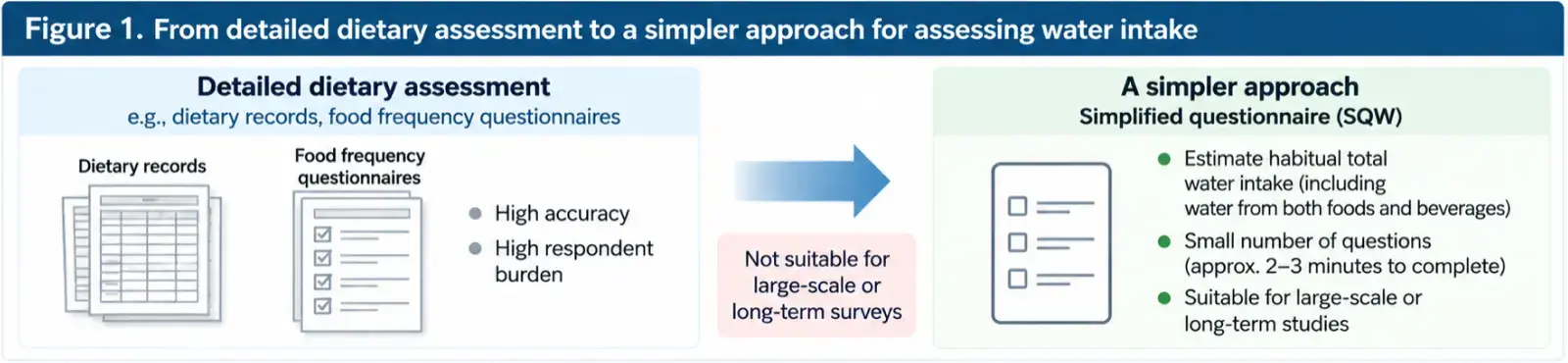
Water is essential for human health, supporting functions such as temperature regulation, circulation, and nutrient transport. Assessing daily water intake requires consideration not only of beverages but also of the water contained in foods.
The research team first conducted a systematic review of methods used to assess water intake across countries and regions, organizing the evidence by assessment approach and study population. The team then focused on a practical challenge: although detailed dietary records are an important method for assessing water intake, they can place a considerable burden on participants and may be difficult to use in large-scale or long-term studies. The researchers therefore set out to develop a simple questionnaire for Japanese adults that could estimate habitual water intake while reducing the burden on participants.
Research Findings
1 Estimating habitual total water intake with a small number of questions
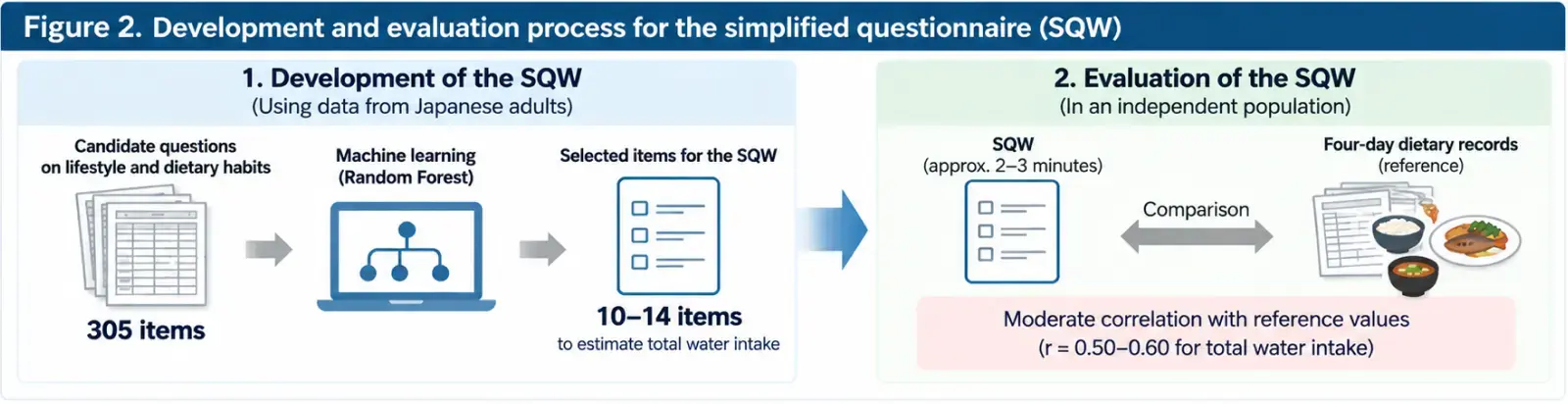
Using data on dietary and beverage intake as well as lifestyle habits among Japanese adults, the researchers narrowed down the questions most useful for estimating water intake. During model development, a machine-learning method (Random Forest) was used to select 10–14 items, with the number of items varying by sex and season, for estimating total water intake from an initial set of 305 lifestyle-related questions.
※Total water intake refers to water from beverages, foods, and alcoholic beverages.
2 Evaluating the questionnaire in an independent population
The simplified questionnaire was evaluated in a population separate from the one used for model development by comparing questionnaire-based estimates with water intake calculated from four-day dietary records. Estimated total water intake showed a moderate correlation with the values derived from the dietary records. Designed to be completed in approximately two to three minutes, the short questionnaire may be useful for large-scale epidemiological studies.
3 Assessing sources of water intake according to the research purpose
In addition to the short version for estimating total water intake, the researchers also examined a questionnaire for assessing water intake by source, including beverages, alcoholic beverages, and foods. The framework allows researchers to choose between a lower-burden approach and a more detailed assessment of water sources depending on the purpose of the study.
Significance and Future Perspectives
This research represents a step toward establishing a practical method for assessing water intake that is suited to the lifestyles and dietary habits of Japanese adults. Enabling habitual water intake to be assessed in larger populations is expected to support the accumulation of foundational data for health and nutrition research. Further validation in different populations will be needed.
Researcher’s Perspective
“Accurately assessing habitual water intake often requires detailed dietary assessment, which can place a considerable burden on participants. In this study, we focused on reducing that burden while still capturing water intake from both foods and beverages. By developing a short questionnaire, we hope to provide researchers with a practical option for assessing habitual water intake in large populations. Depending on the purpose of a study, the framework can also be used to examine water intake by source in greater detail. Going forward, we would like to further validate this approach in different populations and explore its application in large-scale health and nutrition research.”
— Junki Ikeguchi, Suntory Global Innovation Center Ltd.
Presentation Details
Conference:
18th World Congress on Public Health (WCPH 2026)
Dates:
September 6–9, 2026
Venue:
Cape Town International Convention Centre (CTICC), Cape Town, South Africa
Presentation Title:
A Systematic Review of Water Intake Assessment Across Populations and the Development of a Population-Specific Prediction Model for Japanese Adults
Authors:
Junki Ikeguchi¹˒², Hiroaki Ueshima³, Hiroki Tanaka⁴, Keiko Mizuma⁵, Yumi Nakamura², Aya Hirata⁶, Tomonori Okamura⁶, Satoshi Nakamura⁴, Hiroshi Tamura¹˒³
Affiliations:
¹ Graduate School of Informatics, Kyoto University
² Research Institute, Suntory Global Innovation Center Limited
³ Center for Innovative Research and Education in Data Science, Institute for Liberal Arts and Sciences, Kyoto University
⁴ Division of Information Science, Nara Institute of Science and Technology
⁵ Institute for Water Science, Suntory Global Innovation Center Limited
⁶ Department of Preventive Medicine and Public Health, Keio University School of Medicine
We share the latest news, announcements, and day-to-day activities at SIC. If you are interested, please follow our page to stay updated.
[Suntory Global Innovation Center Official LinkedIn]


