


Suntory Global Innovation Center Ltd. (SIC) presented research findings at the 27th North American ISSX Meeting, held in San Francisco, USA, from October 11 to 14, 2026. The study used a physiologically based pharmacokinetic (PBPK) model to estimate and validate an intake regimen for the food-derived compound ergothioneine (EGT) aimed at improving sleep quality.
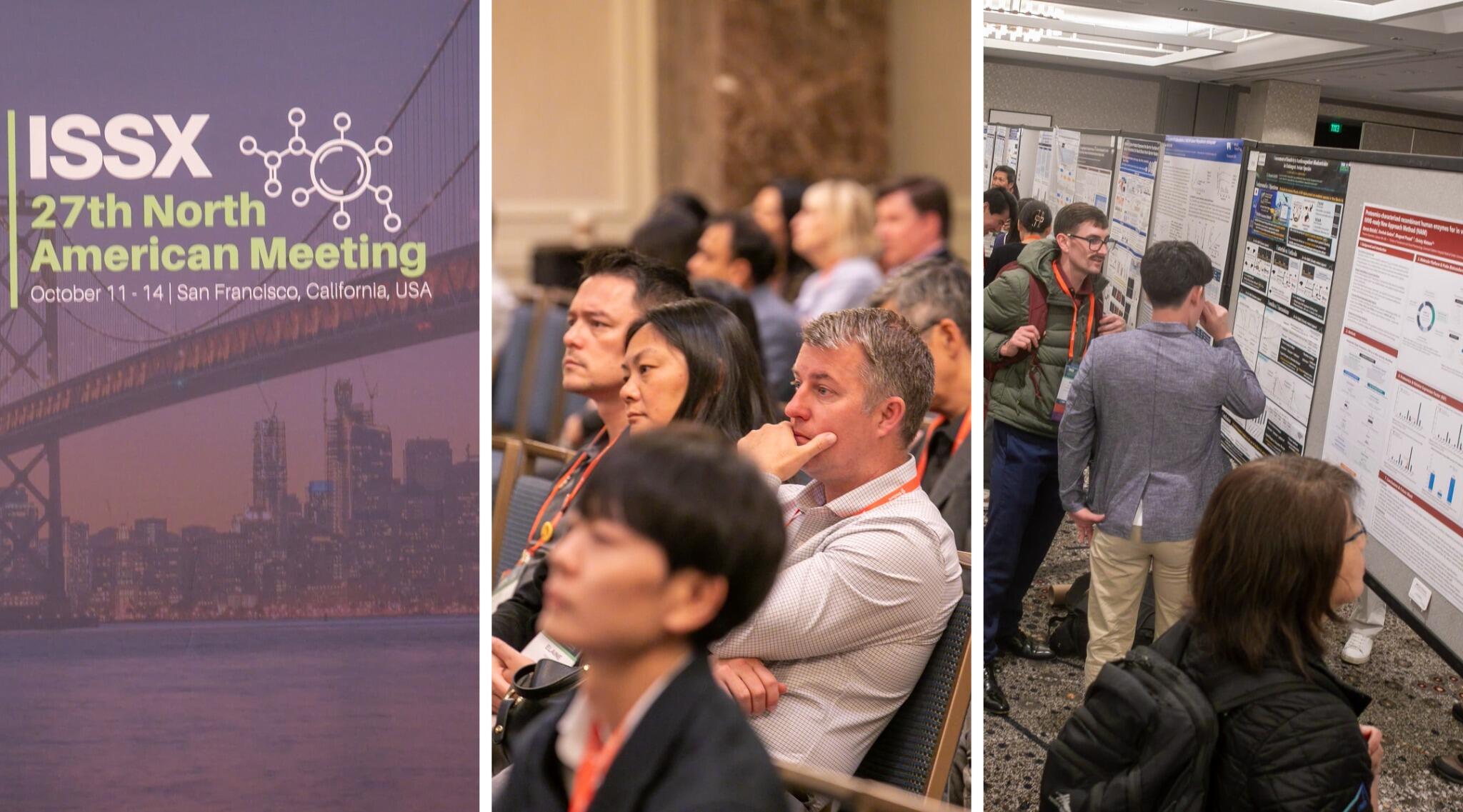
The 27th North American ISSX Meeting venue
Background
Ergothioneine (EGT) is an amino acid derivative obtained from the diet. In the body, it is transported into tissues via the organic cation transporter OCTN1 (SLC22A4) and gradually accumulates with continued intake. EGT has high antioxidant activity, and potential benefits across various health indicators have been suggested.
SIC had previously confirmed that healthy adults who consumed 20 mg of EGT per day for four weeks showed improved sleep quality. However, it remained unclear whether a lower daily dose could provide a similar benefit.
In this study, we focused on a PBPK model, an approach used in areas such as drug development to mathematically describe and predict the behavior of compounds in the body based on pharmacokinetic parameters. We applied this approach to examine an effective intake regimen for EGT as a functional food ingredient.

Figure 1. Overall strategy for estimating and validating an EGT intake regimen using a PBPK model.
Selecting 8 mg/day for 16 Weeks Using a PBPK Model
First, the mean plasma EGT concentration of 9.51 μM observed when improved sleep quality had been confirmed in a previous study was set as the target level. A pharmacokinetic study was then conducted in 28 healthy adults who consumed either 5 mg or 10 mg of EGT per day for eight weeks, and EGT concentrations in plasma and whole blood were measured.
Using these data, we developed a PBPK model for EGT and simulated plasma EGT concentrations at daily doses of 6, 7, 8, and 9 mg. Based on the simulations, 8 mg/day for 16 weeks was selected as the intake regimen expected to reach the target concentration.
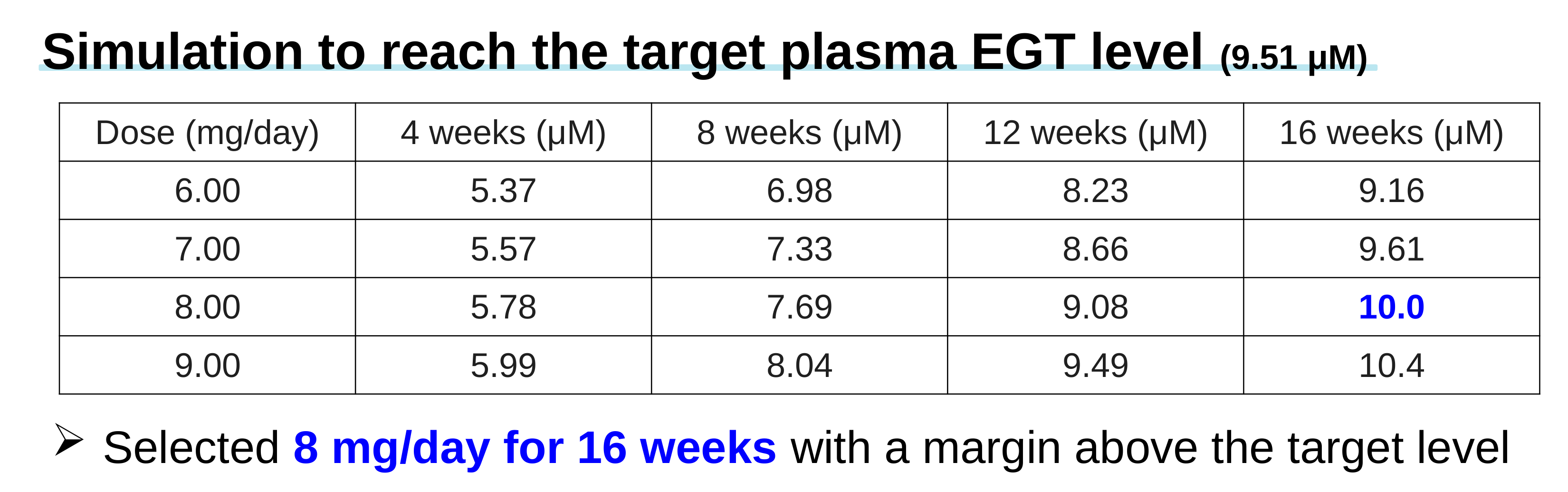
Figure 2. Simulation of plasma EGT concentrations to identify an intake regimen reaching the target level of 9.51 μM.
Validating the Model Prediction and Confirming Improved Sleep Quality
Next, 100 healthy adults were randomly assigned to an EGT group or a placebo group in a randomized, double-blind, placebo-controlled trial. Participants in the EGT group consumed 8 mg of EGT per day for 16 weeks.
At week 16, the mean plasma EGT concentration in the EGT group was 9.38 μM, a 6.20% difference from the PBPK model prediction. This showed that the model prediction of EGT pharmacokinetics closely matched the observed trial results.
Sleep quality was also assessed using the Oguri-Shirakawa-Azumi Sleep Inventory Middle-Age version (OSA-MA). Compared with the placebo group, the EGT group showed significant improvements in two items: the “Refreshing” and “Sleep length” factors.
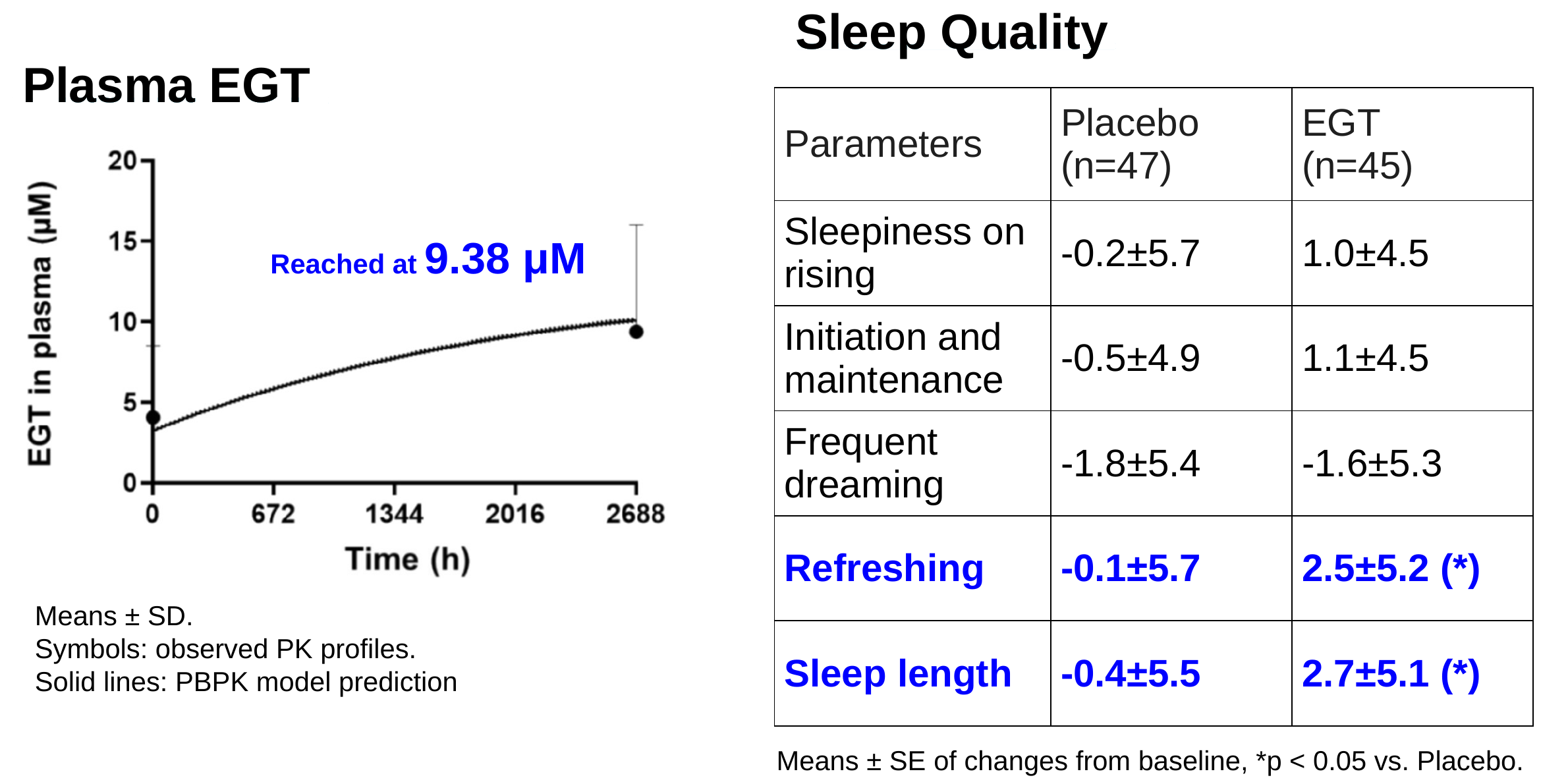
Figure 3. Predicted and observed plasma EGT concentrations (left) and assessment of sleep quality (right).
Significance and Future Perspectives
This study used a PBPK model to determine an intake regimen for a functional food ingredient and then validated the prediction in an efficacy study. Considering dose and duration on the basis of a component’s pharmacokinetics before conducting a long-term efficacy study may enable study designs to be developed on a more scientific basis.
SIC will continue to scientifically investigate the pharmacokinetics and efficacy of food components and advance research that contributes to the development of functional foods.
Researcher’s Perspective
Kentaro Nishioka comments on the study:
“In this study, we developed an ergothioneine PBPK model to identify an appropriate lower-dose intake regimen for improving sleep quality. However, constructing such a model requires pharmacokinetic data, which are currently lacking for many food components. Moving forward, we hope that further advances in pharmacokinetic research on food components will provide the foundation needed to expand such predictive approaches, thereby contributing to the development and practical application of functional foods.”
Presentation Details
Meeting: 27th North American ISSX Meeting
Dates: October 11–14, 2026
Venue: Hilton San Francisco Union Square (San Francisco, California, USA)
Presentation title: OPTIMIZATION OF ERGOTHIONEINE DOSE FOR IMPROVED SLEEP QUALITY USING PHYSIOLOGICALLY BASED PHARMACOKINETIC MODEL
Authors: Kentaro Nishioka¹˒², Hitoshi Okumura¹, Yudai Araragi², Reiya Yamashita², Toshihide Suzuki¹, Hiroshi Watanabe¹, Yumi Nakamura¹, Yukio Kato², Norihito Murayama¹
Affiliations: ¹ Research Institute, Suntory Global Innovation Center Ltd., Kyoto, Japan
² Faculty of Pharmacy, Kanazawa University, Kanazawa, Japan


