


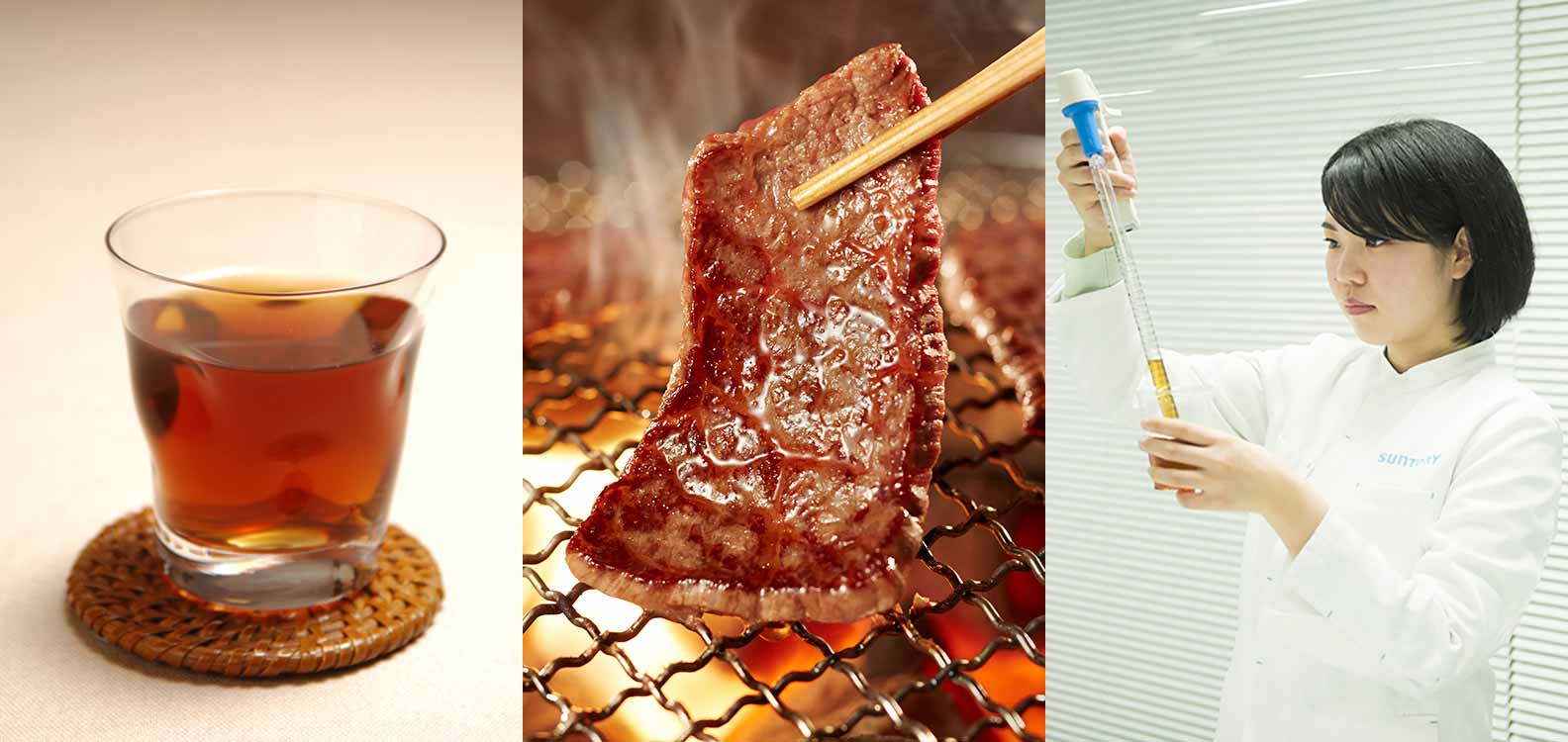
Explaining food and drink pairings based on the human senses
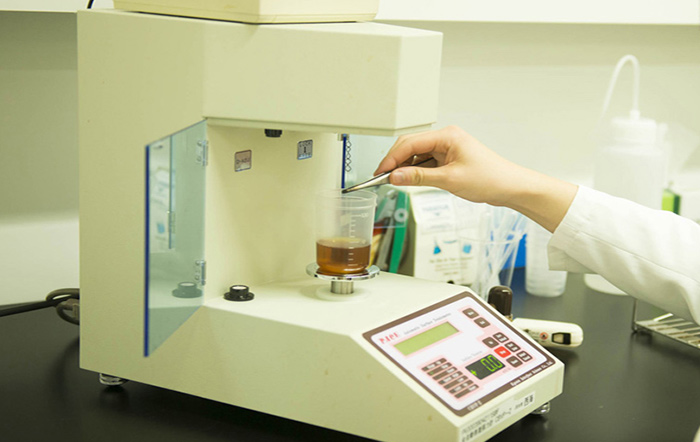
Building on subjective “marriage” combinations, the scientific community has opened a new field of inquiry known as molecular gastronomy—where flavors are paired not by trial and error, but through an analysis of their molecular structure. However, this still left us with the question of why people find these combinations so delicious in the first place. Our research project set out to find the reason for common food pairings in the human senses, rather than in collective experience or chemistry.
Focusing on the changing sensations in the mouth when tasting something delicious
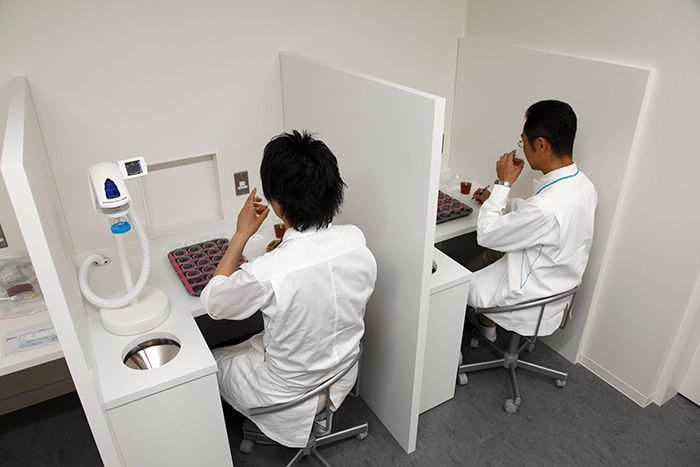
Most people prefer a beverage with a bit of a irritation when they eat fatty or greasy foods—red wine with red meat or oolong tea with Chinese food, for example. In this study, we focused on the sensations in the mouth to try to find the reason behind this common pairing. Our experiments involved sensory evaluations using astringent beverages and greasy foods.
* An article on our study was published in the October 9, 2012 issue of Current Biology as part of a collaborative research project with the Monell Chemical Senses Center in the US.
Test methods
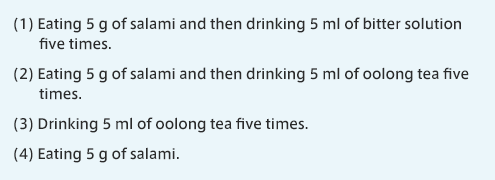
A total of 21 subjects, including six males and 15 females between the ages of 20 and 69, were asked to take food and drink, repeating the patterns shown above and then evaluate them in terms of three items (“greasiness,” “astringency,” and “bitterness”) after drinking a beverage and/or eating salami. Twenty-one levels of sensory intensity in the mouth were used.
Oolong tea makes greasy food taste better
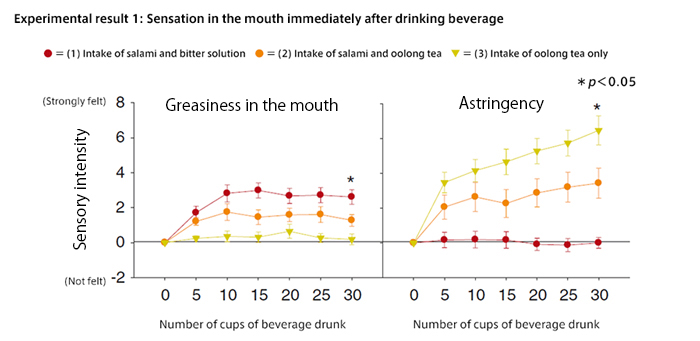
When we analyzed sensations in the mouth immediately after drinking beverages in patterns (1), (2), and (3), we found that the sensation of “greasiness” decreased significantly when salami was eaten with oolong tea (2) rather than the bitter solution (1). We also found that “astringency” ratings increased with oolong tea (2) (3) as “greasiness” decreased. It was therefore made clear that more “astringency” means less “greasiness”, and vice-versa.
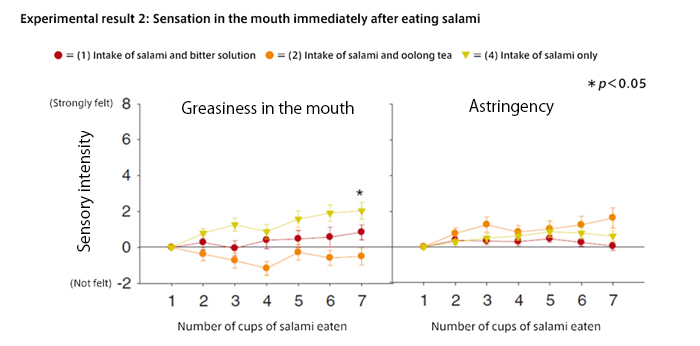
Analysis of mouth sensations immediately after eating salami in patterns (1), (2), and (4) showed that the sense of “greasiness” decreased significantly when salami was eaten with oolong tea (2) as compared with when it was eaten with the bitter solution (1).
These results help us explain what our personal experience already tells us—that oolong tea goes well with greasy food. The stimulating “astringency” of the refreshing tea actually reduces the sensation of greasiness in the mouth and supports our preference for astringent beverages with most meals. Other research has shown that oolong tea has the ability to emulsify fats, a process that actually helps remove oils from the mouth. In other words, the sense of greasiness can be counteracted by repeatedly sipping an astringent beverage during a meal, and the effect is especially potent with oolong tea. Our conclusion was that oolong tea is in fact an effective way of increasing the enjoyment of dishes with higher fat content—in other words, the perfect marriage.
The quest for the perfect pairing
How do people actually experience the interplay between food and drink? In our research on human behavior on liking, we tried to define the principles that determine how deliciousness—one of the most important factors in our enjoyment of a meal—actually comes about. At Suntory, we are not only working to develop beverages that pair well with certain types of food, but also to further clarify the reasons behind these ideal pairings. We intend to use our products to raise awareness about the insights our research has produced so that everybody can take even more pleasure in the dining experience.


