


2026.09.11
Others Plant science StoryBeyond the “World First”: Opening Up New Possibilities for “Blue” in Roses
— New findings on copigmentation presented at IHC2026 —
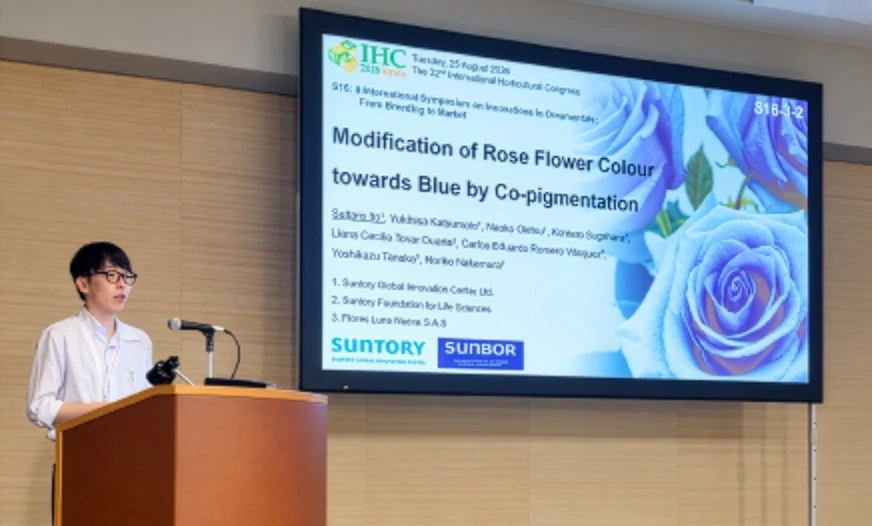
Suntory Global Innovation Center Ltd. (SIC) presented new research findings toward the realization of bluer roses at the 32nd International Horticultural Congress (IHC2026), held in Kyoto in August 2026.
The research demonstrated a violet-blue rose flower color by harnessing the interaction between blue pigments and nearly colorless compounds known as “copigments.”
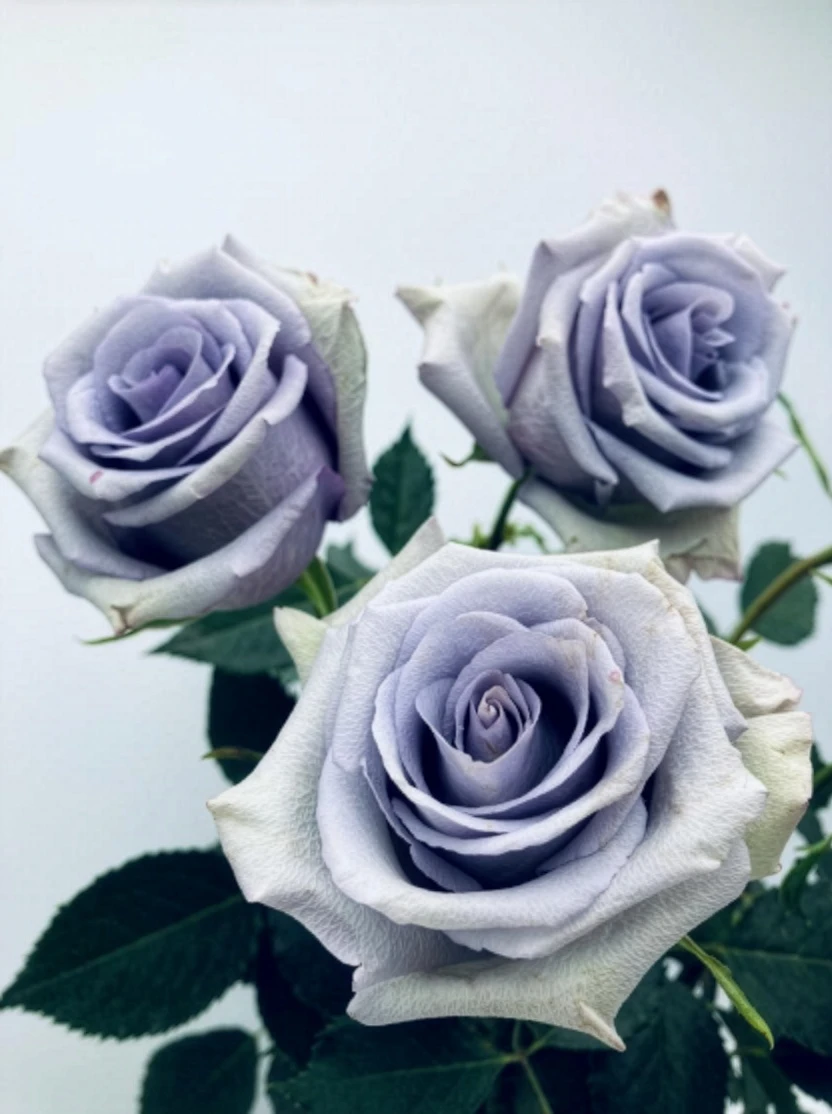
Suntory began its blue rose research in 1990. Roses naturally lack a key gene required to produce delphinidin, the blue pigment found in many blue flowers. In 2004, Suntory Group became the first in the world to develop roses that accumulate delphinidin by introducing a gene that enables roses to produce this pigment. This achievement led to the launch of SUNTORY blue rose APPLAUSE in 2009. Since then, SIC has continued its research toward even bluer roses by exploring the various mechanisms that create blue flower colors in nature.
In this study, the researchers explored a new approach to achieving bluer flower colors by focusing on the effect of copigmentation.
Flower color is determined by more than pigments alone
Flower color is not determined solely by the type or amount of pigment present. It can also vary greatly depending on surrounding compounds and the environment within the petals.
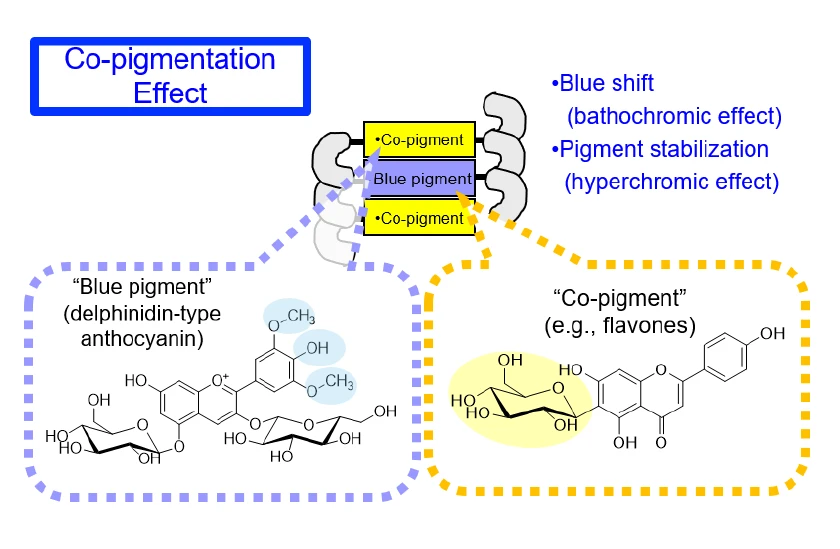
One of the keys is the role of copigments. Copigments themselves are nearly colorless, but when they interact with blue pigments, they can make the resulting color appear bluer and deeper. Some naturally blue flowers produce their blue coloration through this mechanism, known as copigmentation. For example, certain flowers are known to achieve vivid blue coloration through the coexistence of blue pigments and colorless compounds called flavone C-glycosides. Roses, however, naturally produce neither blue pigments nor the flavone C-glycosides that can act as their copigmentation partners. This led the researchers to focus on reconstituting the copigmentation effect in roses.
The team first conducted in vitro color reconstitution experiments by combining blue pigments with various copigments, confirming that flavone C-glycosides enhanced the blue coloration of the pigment. They then introduced multiple biosynthetic genes into roses to produce the necessary compounds within the flowers themselves. As a result, both blue pigments and flavone C-glycosides accumulated in the petals, producing a violet-blue flower color. The researchers also found that lines with higher proportions of flavone C-glycosides tended to show bluer flower colors. The findings demonstrate a different route toward the long-standing goal of making roses bluer.
“Until now, a major focus in flower color modification has been which pigments can be produced in a plant. In this study, we looked beyond pigment production itself and focused on the coloration mechanism — how the pigments produced interact with surrounding compounds and ultimately appear as flower color. I believe these findings point to a new possibility for flower color modification: designing flower color by considering interactions between molecules.”
Reconstituting the effect in plants and validating it under field conditions
After identifying the copigmentation effect in vitro, the team recreated it in rose flowers and went on to validate the resulting flower color under natural conditions. The researchers evaluated both the color of the flowers and the compounds present in the petals. In addition to greenhouse trials in Japan, three years of field trials were conducted in Colombia, one of the world’s major rose-producing countries, confirming that the violet-blue flower color remained stable. The research has progressed step by step from in vitro experiments to plants and then to field conditions.
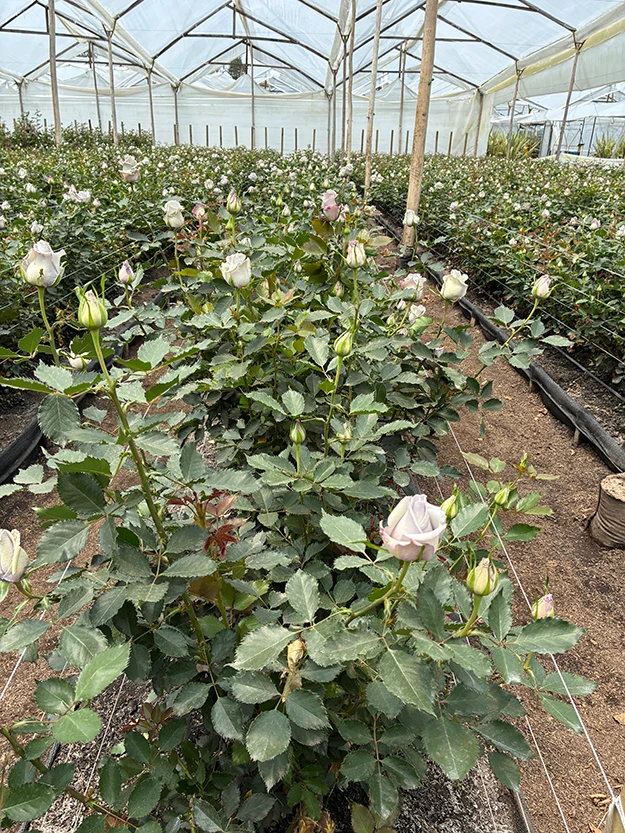
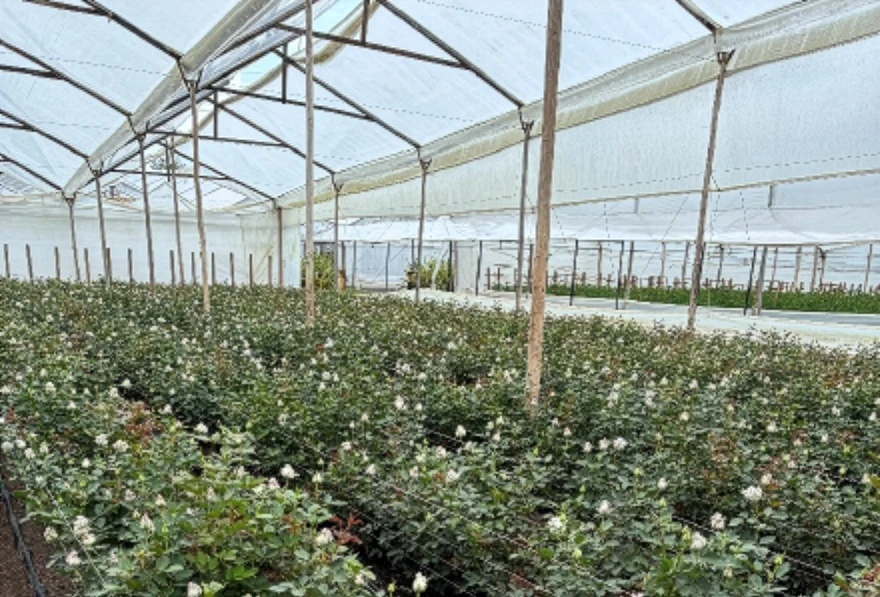
When research findings become visible in an actual flower, they provide a way to confirm what has been learned — while also revealing the next questions to address. The violet-blue rose achieved in this study is not an endpoint, but another clue toward a deeper understanding of the mechanisms that create flower color.
“These findings are significant not only because we achieved a bluer flower color, but also because they deepen our understanding of how flower color is created. Flower color emerges from the interplay of many factors, including the type and amount of pigments, surrounding compounds, and the environment within the petals. Understanding these combinations may open up new possibilities for creating diverse expressions of blue. We will continue this challenge, unraveling these mechanisms one by one as we strive to create blue roses unlike any seen before.”
Expanding the Possibilities of “Blue” in Roses
More than 20 years have passed since Suntory became the first in the world to develop roses that accumulate the blue pigment delphinidin in 2004. SIC continues to pursue even bluer roses, exploring not just a single method but the diverse mechanisms through which flower colors are produced.
The latest findings also emerged from international collaborative research involving SIC, Suntory Flowers, overseas production partners, and universities and research institutions in Japan.
Pursuing an even bluer rose also means deepening our understanding of how plants create color. The copigmentation approach demonstrated in this study may also be applicable to other ornamental species in which blue flower coloration is difficult to achieve. SIC will continue to build on these findings, further expanding the possibilities of blue as a flower color and advancing research toward the creation of a diverse range of flower colors while contributing to a deeper understanding of flower coloration mechanisms, the creation of new flower colors, and the further advancement of plant science.
We share the latest news, announcements, and day-to-day activities at SIC. If you are interested, please follow our page to stay updated.
[Suntory Global Innovation Center Official LinkedIn]


