


2026.09.24
Others Plant science StoryTwo Methyltransferase Genes Involved in the Biosynthesis of Embigenin, a Copigment Contributing to Blue Flower Coloration, Identified
―Findings Presented at the 43rd Annual Meeting of the Japanese Society for Plant Biotechnology―
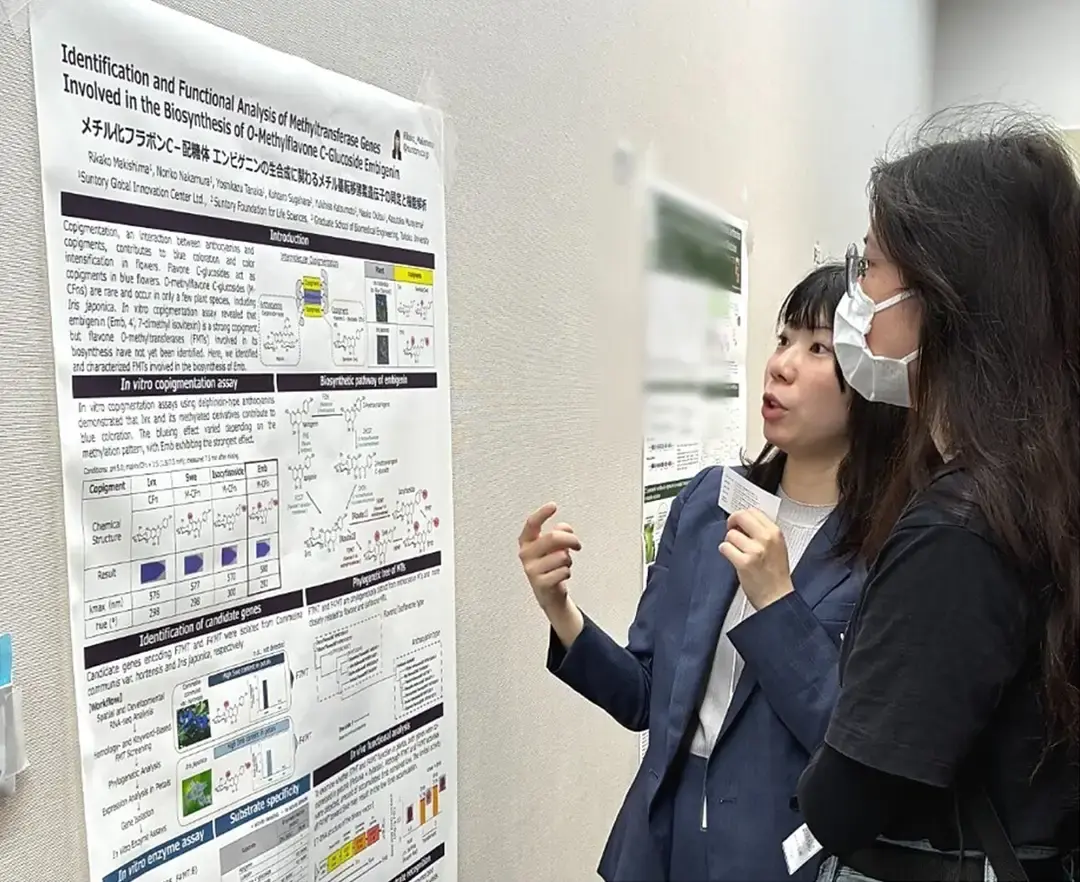
Suntory Global Innovation Center Ltd. (SIC) has newly identified two methyltransferase genes involved in the biosynthesis of embigenin, a methylated flavone C-glucoside that contributes to blue flower coloration. The findings were presented at the 43rd Annual Meeting of the Japanese Society for Plant Biotechnology in Tottori, Japan.
Background
Flower color in plants is determined not only by pigments such as anthocyanins, but also by compounds known as "copigments." Anthocyanins themselves generally appear red to purple, but when they associate at the molecular level with nearly colorless copigments, their color can become bluer or deeper. This phenomenon, known as copigmentation, contributes to the development of blue flower coloration in some plant species.
Methylated flavone C-glucosides found in plants such as Iris japonica function as copigments that contribute strongly to blue flower coloration. However, the methyltransferase genes involved in their biosynthesis had not previously been identified.
In this study, SIC researchers focused on embigenin (4′,7-di-O-methylisovitexin), a methylated flavone C-glucoside, and investigated the genes encoding the enzymes involved in its biosynthesis and their functions.
Research Findings
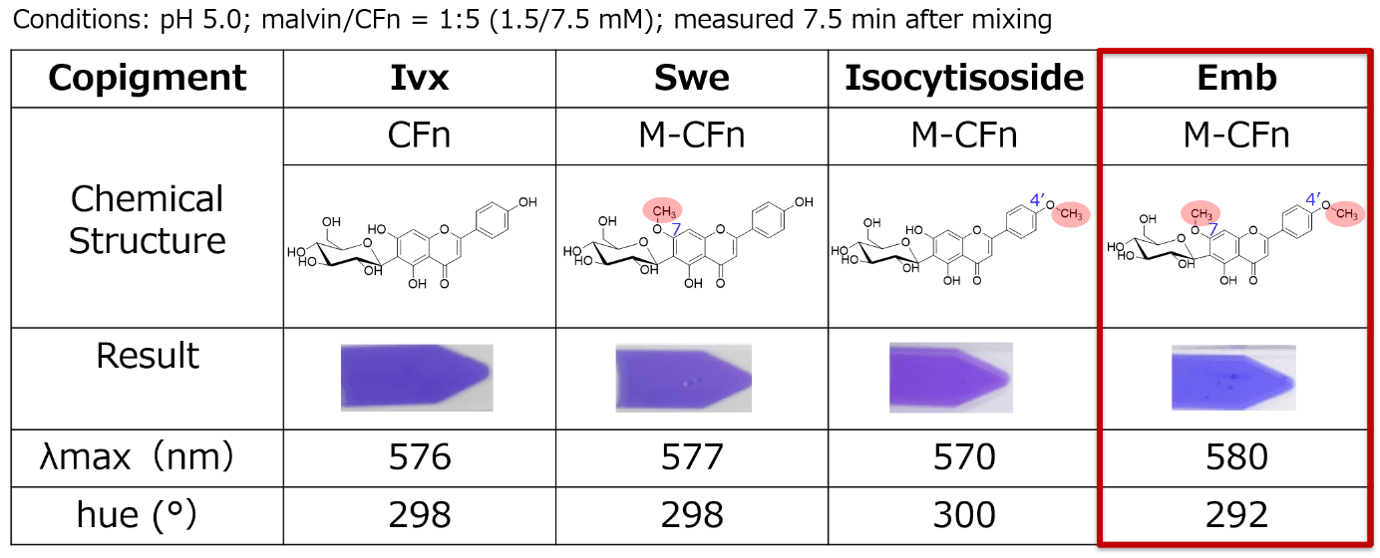
First, a flower color reconstitution assay using delphinidin-based anthocyanins showed that swertisin, in which the 7-Oposition of isovitexin is methylated, was effective for blue coloration. This effect was further enhanced by embigenin, which is additionally methylated at the 4′-Oposition.
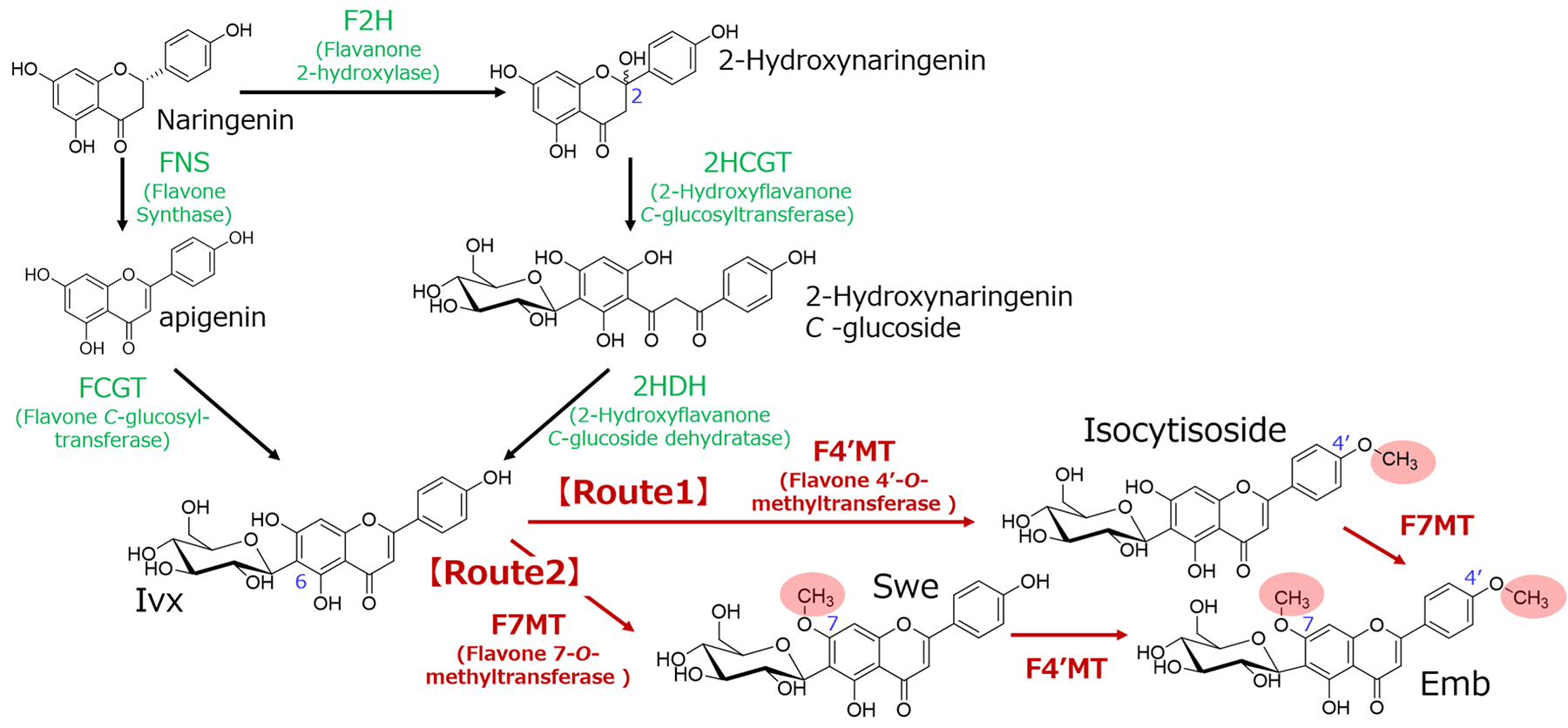
Next, transcriptome analysis of flower petals was performed to identify candidate genes involved in embigenin biosynthesis. The researchers isolated a flavone 7-O-methyltransferase gene (F7MT), which encodes an enzyme that converts isovitexin to swertisin, from Commelina communis var. hortensis, and a flavone 4′-O-methyltransferase gene (F4′MT), which converts swertisin to embigenin, from Iris japonica. Phylogenetic analysis also revealed that these enzymes are phylogenetically distinct from anthocyanin methyltransferases and more closely related to flavone/isoflavone-type methyltransferases.
Enzyme activity was also confirmed in petunia (Petunia × hybrida) into which both genes had been introduced. However, embigenin accumulation was low, potentially due in part to the low activity of F4′MT toward swertisin. The researchers are currently conducting structural analyses using X-ray crystallography and AlphaFold to better understand the substrate specificity of these enzymes.
Significance and Future Perspectives
Creating new flower colors requires a deeper understanding not only of pigments, but also of the compounds that work together with them and the mechanisms by which those compounds are biosynthesized.
The identification of these two enzyme genes involved in the biosynthesis of embigenin, which contributes to blue flower coloration, suggests the possibility of producing methylated flavone C-glucosides even in plants that do not naturally accumulate these compounds.
SIC will continue to investigate the substrate recognition mechanisms of these enzymes based on their three-dimensional structures, with the aim of improving enzyme activity. Through the accumulation of such fundamental research, SIC aims to further deepen the understanding of the mechanisms underlying flower coloration and contribute to the creation of new flower colors and the further advancement of plant science.
Researcher's Perspective
"Methylated flavone C-glucosides, including embigenin, are rare compounds found only in a limited number of plant species. By identifying the enzyme genes involved in their biosynthesis, we have established a basis for producing them in plants that do not naturally accumulate them. Understanding such compounds and how they are biosynthesized is key to elucidating the mechanisms by which plants create their diverse flower colors. Going forward, we plan to examine in greater detail how these enzymes recognize their substrates, with the aim of improving embigenin production. We also aim to explore new possibilities for creating novel flower colors. "
— Rikako Makishima, Suntory Global Innovation Center Ltd.
Presentation Details
Conference:
The 43rd Annual Meeting of the Japanese Society for Plant Biotechnology
Dates:
September 4–6, 2026
Venue:
Torigin Bunka Kaikan and Tottori Civic Hall, Tottori, Japan
Presentation Title:
Identification and Functional Analysis of Methyltransferase Genes Involved in the Biosynthesis of O-Methylflavone C-Glucoside Embigenin
Authors:
Rikako Makishima¹, Noriko Nakamura¹, Yoshikazu Tanaka¹, Kohtaro Sugahara², Yukihisa Katsumoto¹, Naoko Okitsu¹, Kazutaka Murayama³
Affiliations:
¹ Suntory Global Innovation Center Ltd.
² Suntory Foundation for Life Sciences
³ Tohoku University
We share the latest news, announcements, and day-to-day activities at SIC. If you are interested, please follow our page to stay updated.
[Suntory Global Innovation Center Official LinkedIn]


