


2026.09.29
Sustainability Water science StoryForest Management and Wildfire May Affect River Flow Differently During Low-Flow Periods
— Findings Presented at the Japan Society of Hydrology and Water Resources (JSHWR)/Japanese Association of Hydrological Sciences (JAHS) 2026 Annual Meeting —
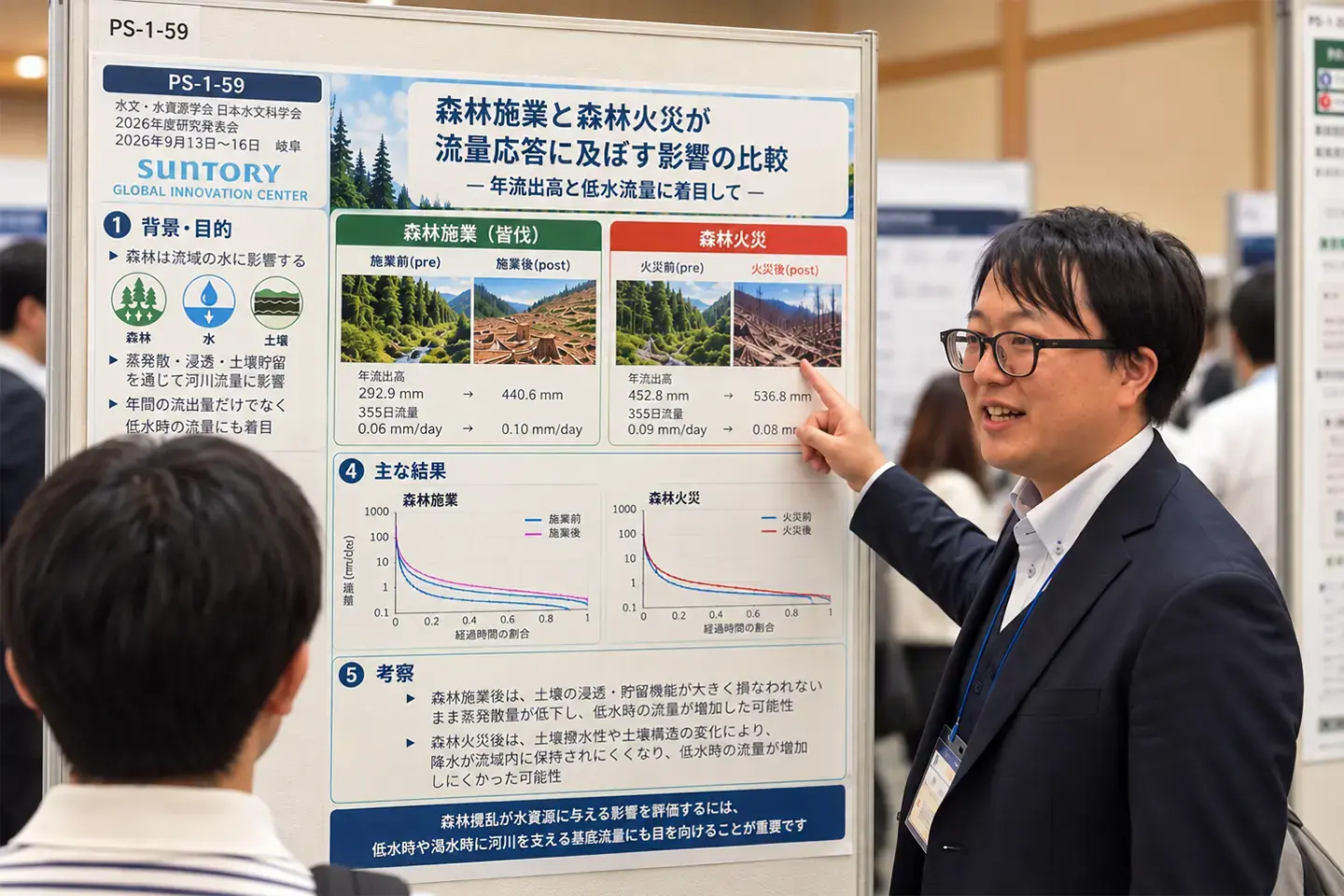
Akira Watanuki of Suntory Global Innovation Center Ltd. (SIC) presented research comparing how forest management and wildfire affect river discharge at the Japan Society of Hydrology and Water Resources (JSHWR)/Japanese Association of Hydrological Sciences (JAHS) 2026 Annual Meeting, held in Gifu, Japan, from September 13 to 16, 2026.
How Changes in Forests Affect River Flow
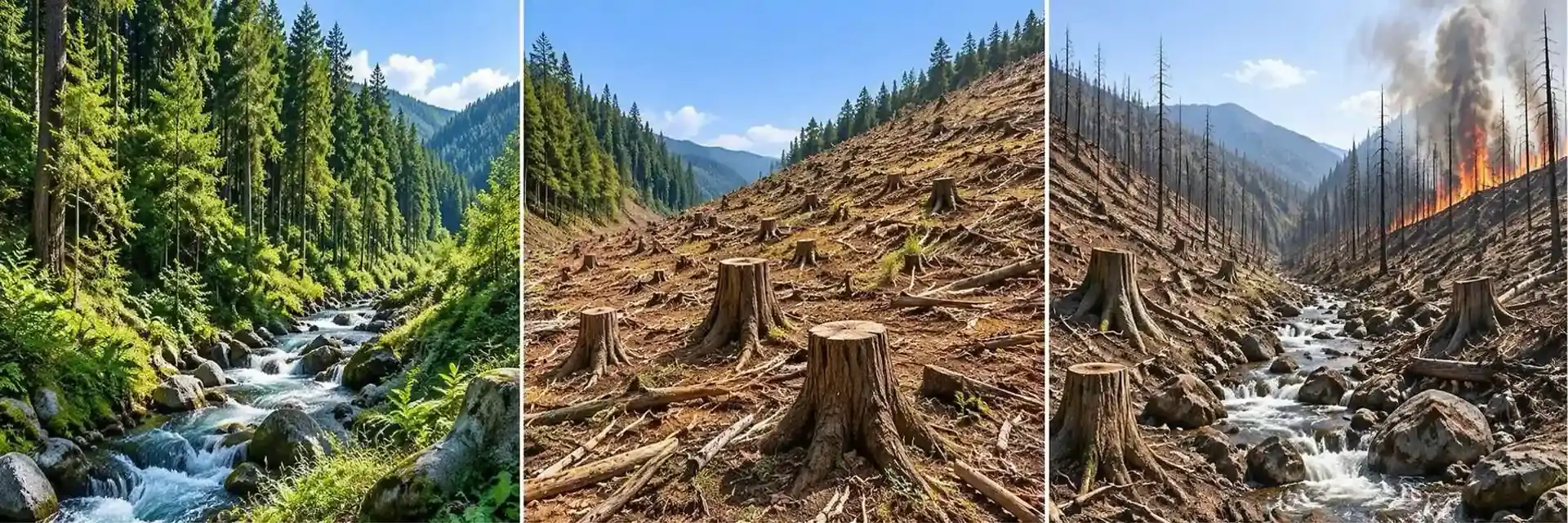
Forests influence both the amount and timing of water flowing from a watershed into rivers through processes such as evapotranspiration, water infiltration, and soil water storage.
Reductions in forest vegetation caused by forest management or wildfire can reduce evapotranspiration, potentially increasing annual runoff. From a water-resources perspective, however, annual runoff alone does not fully describe water availability. River flow during low-flow periods also needs to be examined.
In this study, long-term observation data from the Tatsunokuchi-yama Experimental Watershed of the Forestry and Forest Products Research Institute (FFPRI) were used to compare river discharge before and after forest management and before and after wildfire. In addition to annual runoff depth, the analysis focused on changes in low-flow discharge using flow-duration curves and 355-day discharge, an indicator relevant to drought conditions.
Forest Management and Wildfire Showed Different Low-Flow Responses
The mean annual runoff depth was higher after both forest management and wildfire, although neither difference was statistically significant.
By contrast, 355-day discharge, a low-flow indicator relevant to drought conditions, increased significantly after forest management but showed no significant change after wildfire. Flow-duration curves also indicated a tendency for low-flow discharge to increase after forest management, whereas after wildfire it remained similar to or slightly lower than before the fire.
These results suggest that forest management and wildfire may produce different river-flow responses during low-flow periods, although both involve reductions in forest vegetation.
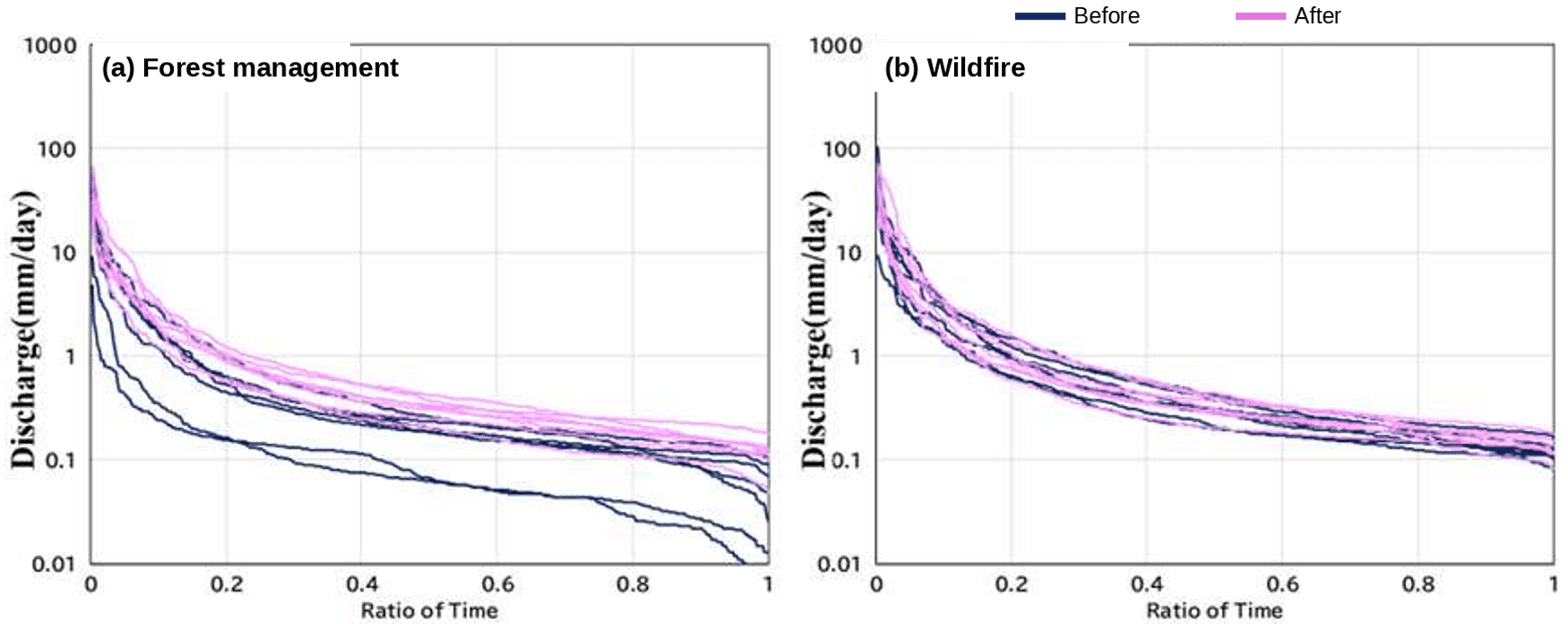
The processes responsible for this difference were not directly measured in this study. One possible explanation is that forest management and wildfire may alter evapotranspiration, infiltration, and watershed storage in different ways. After forest management, reduced evapotranspiration may increase water available during low-flow periods if infiltration and storage functions remain relatively unchanged. After wildfire, soil water repellency and changes in soil structure may reduce infiltration and water storage within the watershed. These changes could limit the extent to which increased annual runoff contributes to river flow during low-flow periods.
Looking at “When Water Is Scarce” to Better Understand Water Resources
The study highlights the importance of examining annual runoff together with river discharge during low-flow periods. Forest disturbances can alter infiltration and water storage within a watershed, potentially affecting the water that sustains river flow when rainfall is limited.
In particular, wildfire impacts are often discussed in terms of flood runoff and sediment transport. The results of this study suggest that low-flow conditions and water availability during dry periods also deserve attention.
SIC continues to advance research on water-cycle processes to support the sustainable management of water resources.
Researcher's Perspective
“Compared with flood runoff and annual runoff, the effects of wildfire on river flow during low-flow periods remain less well understood. Our results suggest that low-flow conditions deserve greater attention when considering the hydrological impacts of wildfire, particularly from the perspective of water availability during dry periods.”
— Akira Watanuki, Suntory Global Innovation Center Ltd.
Presentation Details
Conference:
Japan Society of Hydrology and Water Resources (JSHWR)/Japanese Association of Hydrological Sciences (JAHS) 2026 Annual Meeting
Dates:
September 13–16, 2026
Venue:
Juroku Plaza, Gifu, Japan
Presentation Title:
Comparison of Runoff Responses to Forest Management and Wildfire — Focusing on Annual Runoff Depth and Low-Flow Discharge
Presenter:
Akira Watanuki, Suntory Global Innovation Center Ltd.
We share the latest news, announcements, and day-to-day activities at SIC. If you are interested, please follow our page to stay updated.
[Suntory Global Innovation Center Official LinkedIn]


