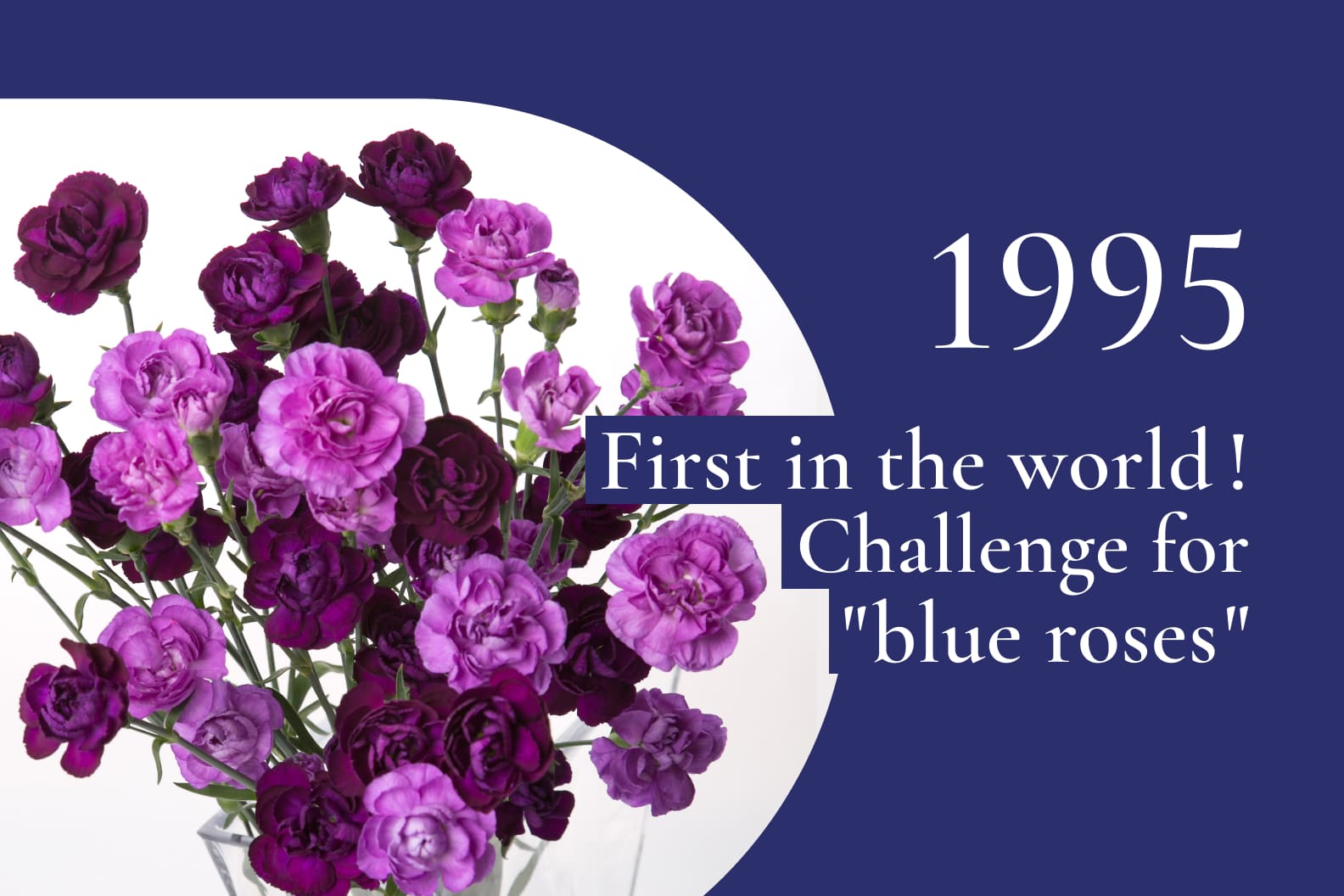
Successful development and commercialization of the blue carnation“Moonseries”
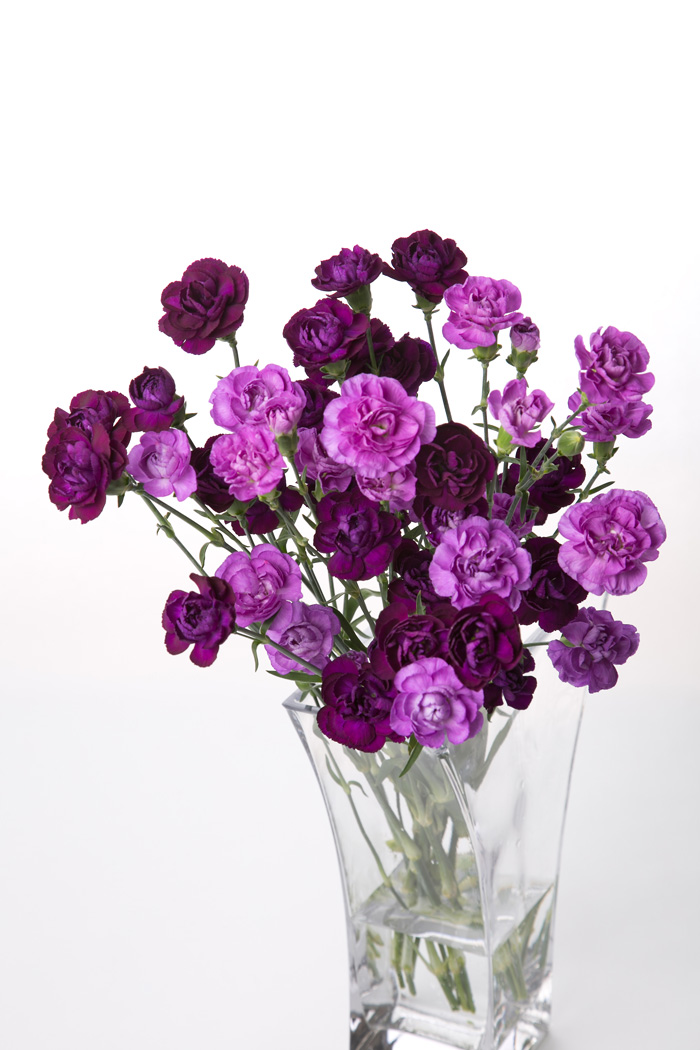
Blue genes of petunia did not work well in roses, but they worked as expected in carnations. The blue pigments “delphinidin” accumulated, and the color of flowers changed to blue.
These flowers, named “Moonseries,” were put on sale in Japan in 1997, and the number of varieties has increased since then. These elegant and beautiful flowers, which signify “eternal happiness” in the language of flowers, have gained popularity.
Moonseries are the first genetically modified flowers in the world that were commercialized. Currently, these blue carnations are produced in Columbia and Ecuador, and are sold primarily in the USA, but in Europe and some countries as well. In Japan, six varieties with different dark and light color combinations are sold. Presently, not only blue genes of petunias but also those of pansies are used for some varieties.
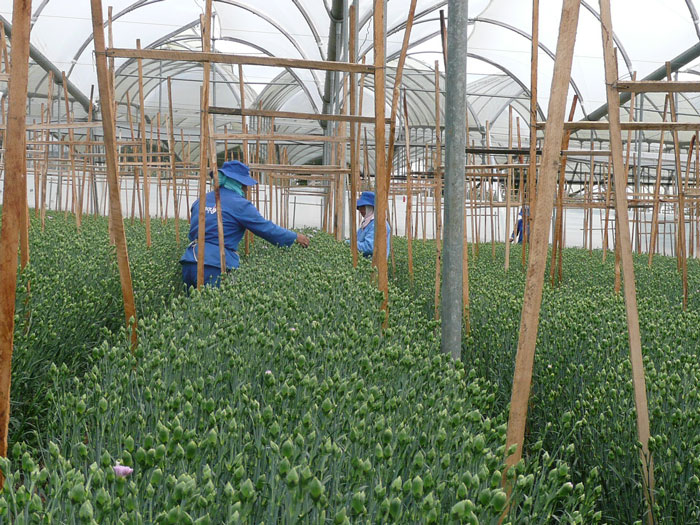
“Blue carnations” were born using an additional gene to blue genes (Senior General Manager Yoshikazu Tanaka Ph.D.)
Convinced that the color of roses could be changed

Although targeted pigments could not be produced for a long time in roses into which genes of petunias had been introduced, blue pigments were expressed in carnations a little earlier. As this expression only was not enough to turn the flower color into blue, we had to use a little ingenuity and introduce a combination of the blue genes and another petunia gene into selected white carnations. With the accumulation of only blue pigments by this method, we succeeded in producing blue carnations. This method was applied in the subsequent development of blue roses, chrysanthemums, and lilies.
Because the color of carnations changed, there was no reason we wouldn’t be able to change the color of roses. Because the blue genes had already been introduced, we were sure that we could produce blue roses eventually.
Carnations have a wide variety of colors
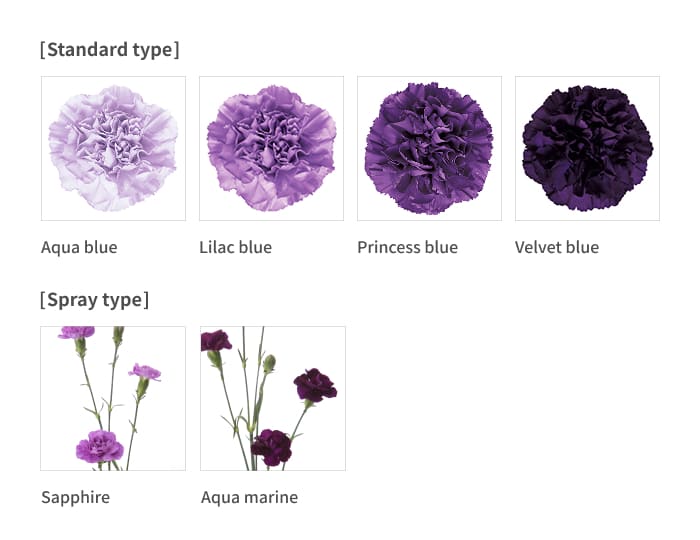
Since the first blue carnations in the world were released, they have been sold mostly for Mother’s Day. It is very difficult to produce many flowers all at once for that day, and the farmers get extremely busy.
Moonseries carnations have a wide variety of colors. The difference in colors is due to the difference in the amount of pigments. Blue pigments accumulate in the vacuoles of petal cells, and the vacuolar environment of carnations is quite different from that of roses. Because the pH in the vacuoles of roses is low, an increase in the amount of pigments results in a reddish color. We can say that roses are not at all suitable for turning blue. It is strange that production of the same kind of blue pigments in chrysanthemums results in much more pure blue than in roses.