
Our history
Suntory Hall opened on October 12, 1986, as Tokyo’s first concert hall specifically for classical music. A hall where classical music could be enjoyed with ideal acoustics and ambience had been a dream not only for many musicians and music aficionados, but also for Keizo Saji, president of Suntory Ltd. at that time.
Across many generations, Suntory Group has been deeply involved in cultural and social contribution activities based on the belief of its founder, Shinjiro Torii, that businesses should be implemented under the spirit of ‘Giving back to society.’ He believed that profits gained from business should be used in three ways: to improve services for customers, to expand business, and to give back to society. His successor as president of Suntory, Keizo Saji, founded the Suntory Museum of Art in 1961 and the Torii Music Foundation (later the Suntory Foundation for the Arts) in 1969. Driven by his commitment to cultural enrichment, he believed in bringing culture into people’s lives and contributing to the development of Japanese arts and culture.
Through the activities of the foundation, Saji maintained extensive and close ties with leading Japanese musicians and people in the music industry. In particular, Yasushi Akutagawa, director of the foundation and composer who led the post-war Japanese music scene, provided strong support in the construction and running of the hall at a time when Japan still had few purpose-built concert halls.
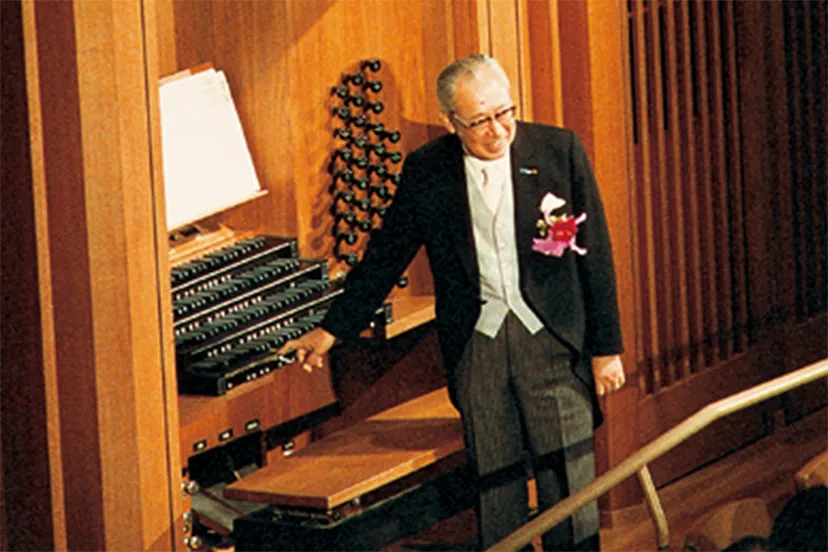
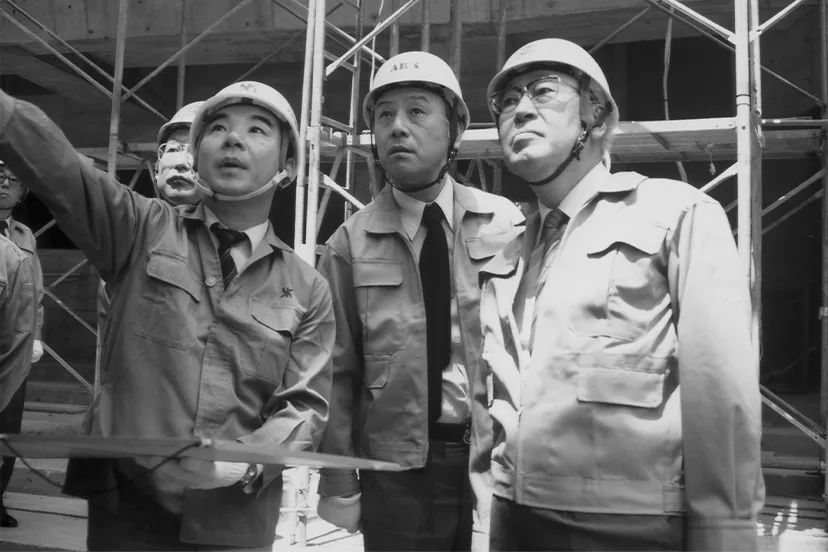
Akutagawa (centre) and Keizo Saji (right)
The dream of building a world-class hall and promoting the culture of concert going came to fruition as part of a large-scale redevelopment plan of the Akasaka/Roppongi area by Mori Building Co. Ltd. This was “ARK Hills,” a new style “complex city” that combined business, lifestyle, culture, information and leisure, with large-scale high-rise office building, urban housing, a hotel and cultural facilities surrounding a plaza (later named ARK Karajan Place), and here Suntory would provide a cultural facility.
It was decided that they would construct a hall specifically for classical concerts rather than a multipurpose event hall and its concept would be the “world’s most beautiful sound.”
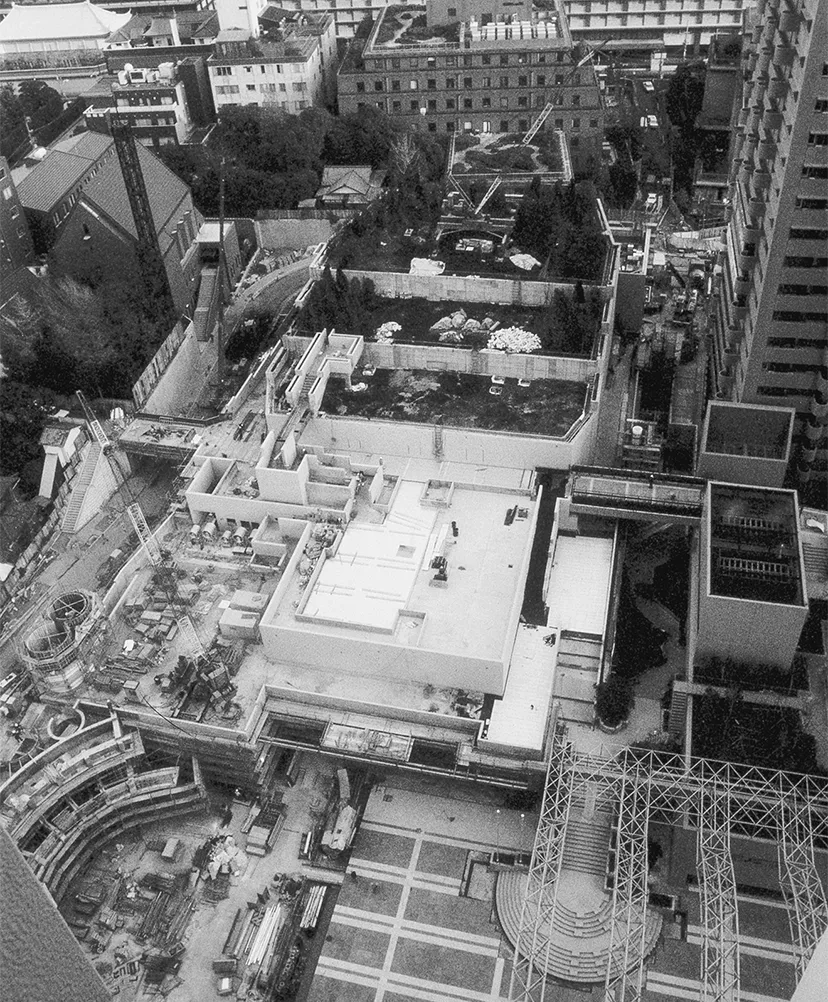
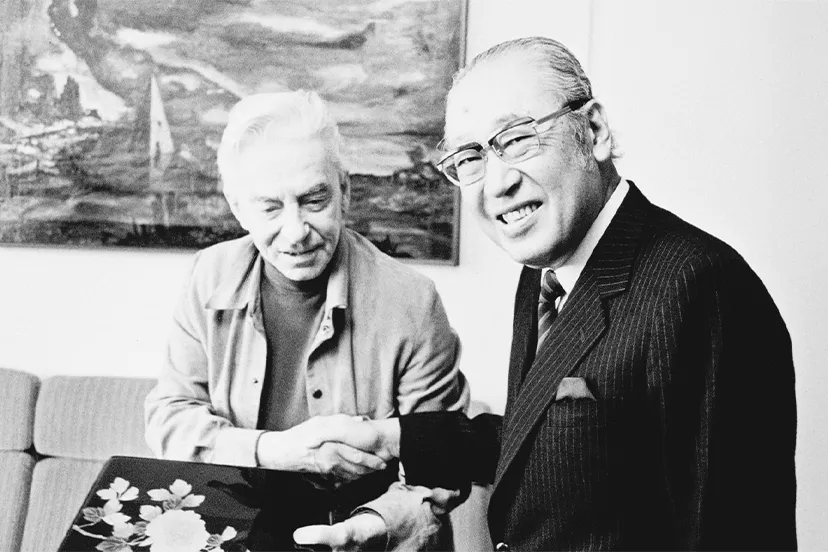
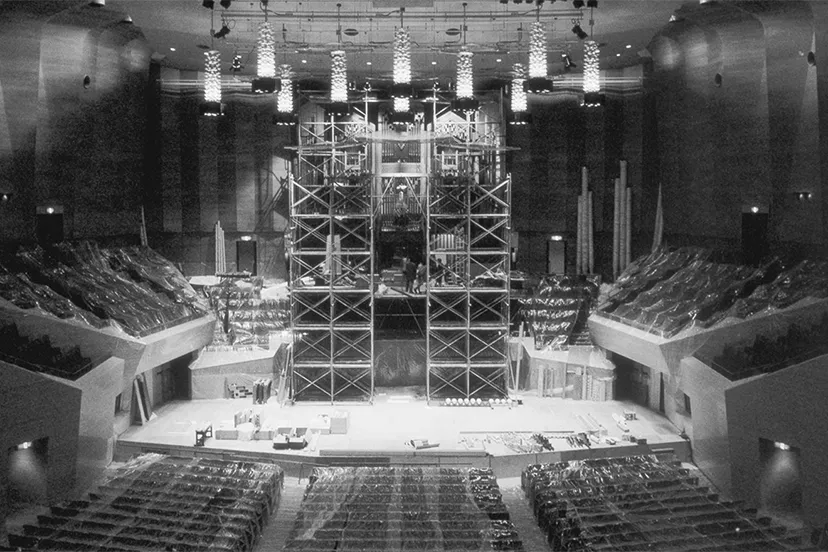
In the aim for the world’s most beautiful sound and supreme musical experiences, Shoichi Sano and his team at Yasui Architects and Engineers, Inc. explored new possibilities in concert hall design, and eventually they decided to adopt the vineyard-style auditorium rather than the shoebox style that had been prevalent since the nineteenth century. Instrumental in this decision was the advice from Herbert von Karajan.
In 1983, Keizo Saji, together with Shoichi Sano, set out on a tour of major European concert halls, and in Berlin he visited the Philharmonie, the home of the Berlin Philharmonic, which was the first hall in the world that was built in the vineyard style. When he sought advice from Herbert von Karajan, who was heavily involved in its construction, Karajan replied: “Music is something that the performer and the audience create and take delight in together to enjoy. Therefore, the intimate vineyard style with the audience surrounding the performers is suitable for the concert hall.” Furthermore, Saji was captivated by the idea that in a vineyard-style hall, sound showers down on all seats like rays of sunlight on terraced vine fields, and this was how the design of Suntory Hall was determined.
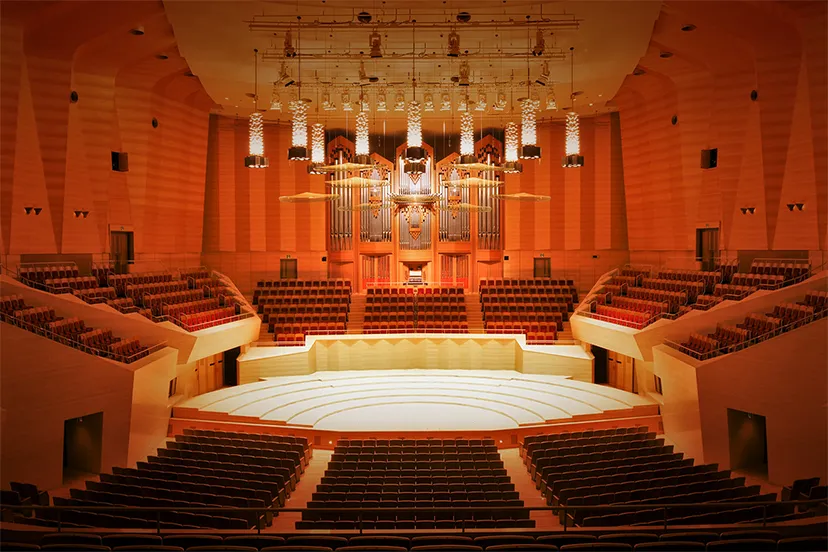
In the Main Hall (capacity 2,006), the seats are larger in size than in many previous halls so that the audience can enjoy music in comfort, and they have been specially designed to also serve as acoustic panels. The spacing between the rows is also generous. Placed above the stage is the organ which is one of the largest in the world with 5,898 pipes. Prompted by Karajan’s remark that “a concert hall without an organ is like a house without furniture,” the project team travelled around Europe listening to organs before commissioning the renowned Rieger Orgelbau of Austria.
The materials and form of the floors, walls and ceilings were selected for their superior acoustic properties. In the aim to pursue the world’s most beautiful sound, Nagata Acoustics were involved from the design phase, building an accurate acoustical scale model of 1:10 and conducting acoustic tests with laser, which were groundbreaking for its time. Meanwhile, the Small Hall, suited to chamber music, has movable seating and can be used for a wide range of purposes.
Yasuhisa Toyota of Nagata Acoustics, who was responsible for the acoustic design of Suntory Hall from the planning stage, has since been involved in the construction of vineyard-style concert halls around the world.
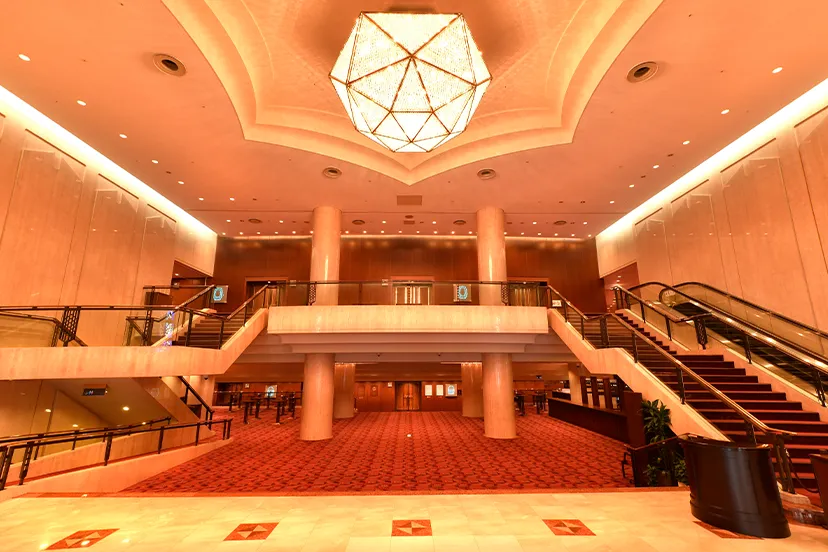
Detailed attention has been given to the decor, aiming not only to provide the supreme musical experience but also to establish the culture of enjoying the concert itself. Large chandeliers, art works such as murals and stained glass, and the red carpet in the foyer add to the experience. To ensure the guests enjoy their visit, Suntory Hall provides trained receptionists, cloakroom, and café and bar ― it was the first concert hall in Japan to serve alcoholic beverages. It is a place where people can socialise before the performance and during the intermission and enjoy the excitement after the concert.
Five years in planning and construction, Suntory Hall was completed in the autumn of 1986 and Keizo Saji became its first president. When Karajan visited Suntory Hall on his last Japanese tour with the Berlin Philharmonic in 1988, he gave a magnificent performance and praised the hall as the “jewel box of sound.”
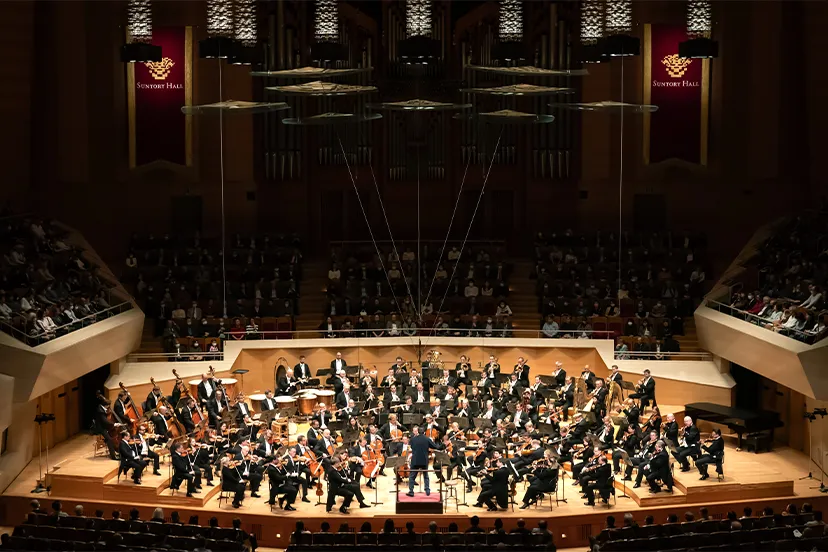
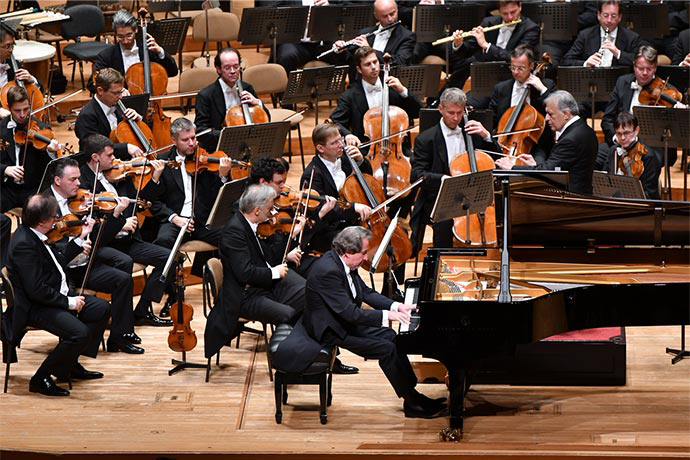
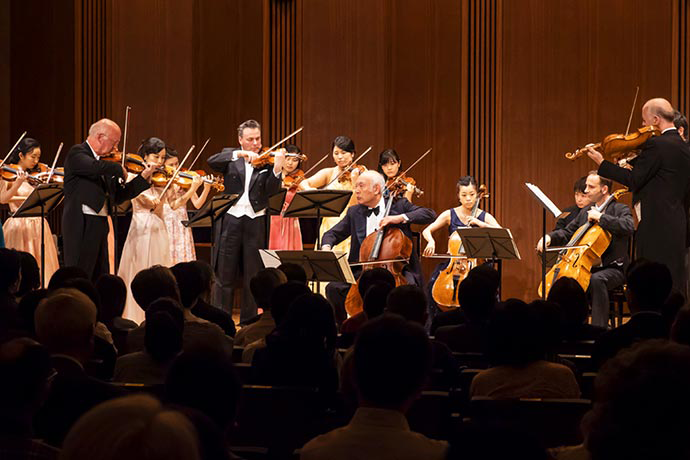
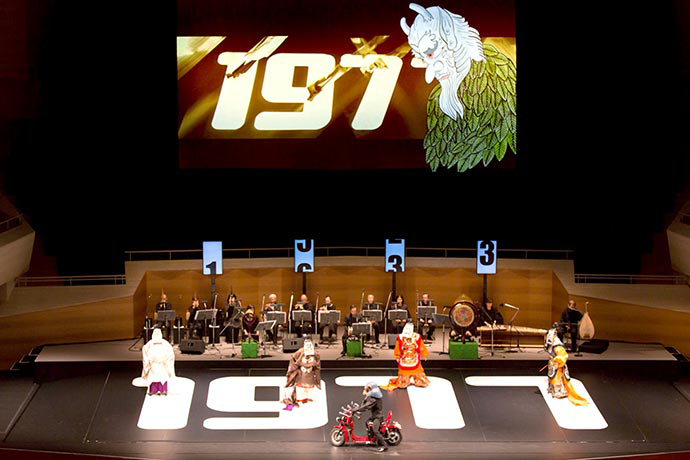
Suntory Hall serves as a hub for creating musical culture, where the world’s finest artists appear night after night. It also contributed to the development of musical culture in Japan, hosting numerous concerts throughout the year including its own original programming such as Suntory Hall Summer Festival (festival of contemporary music), Hall Opera®, Wiener Philharmoniker Week in Japan, Chamber Music Garden, and youth music education programmes. It will continue to deepen its role as an institution that creates, preserves, and passes on musical culture to future generations.