
- Calendar
- Online Ticket Sales
- Access
- JA
- EN
Kyōsai's World: The Israel Goldman Collection
April 22 to June 21, 2026
*There will be an exhibition change during the course of exhibition.
*Download the list of changes in works on display
*Photography is permitted for some works in this exhibition. Please refer to the venue guide for details.
*This exhibition will travel to the Kobe City Museum from July 11 to September 23, 2026, and to the Shizuoka Prefectural Museum of Art from October 10 to December 6, 2026.
The list of changes in worksPDF
*The order of chapters may change at the exhibition venue.
Section 1
Masterpieces from the Goldman Collection
Kyōsai acquired the full range of skills as an academic painter after being trained in the Surugadai branch of the Kano school, for nine years from the age of 10. He established his own unique manner by combining various styles from different traditions, including the popular school of ukiyo-e prints. Kyōga (comic or satirical pictures) became an important part of his artistic identity; and from around 1857, he started to use the art name Kyōsai, using the character 狂 (kyō) which is also found in the word kyōga 狂画. The artist achieved a distinctive mode of expression by combining the characteristics of kyōga ― playful humour, interest in contemporary society and everyday feelings, dynamic compositions and depictions ― with the techniques of high-quality paintings which he had learned from his Kano training. The culmination was achieved in such paintings as Hell Courtesan (Jigoku dayū), dancing Ikkyū and skeletons.
This section showcases exquisite examples of Kyōsai's works in diverse styles, from spontaneous paintings with loose brushstrokes to highly detailed, finished compositions. With this selection of painted highlights from the Goldman Collection, visitors are invited to savour the colourful world of Kyōsai's art.
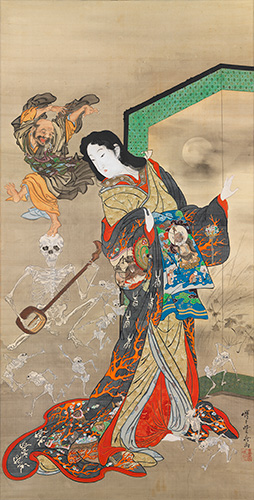
Kawanabe Kyōsai
1871-89.
Israel Goldman Collection, London.
Photo: Ken Adlard.
【To be shown over an entire period】
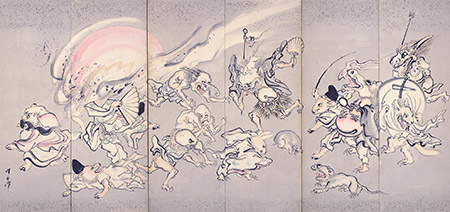
Kawanabe Kyōsai
1871-89.
Israel Goldman Collection, London.
Photo: Art Research Center, Ritsumeikan University.
【To be shown over an entire period】
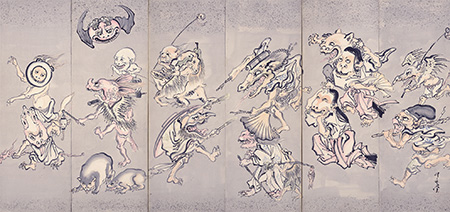
Kawanabe Kyōsai
1871-89.
Israel Goldman Collection, London.
Photo: Art Research Center, Ritsumeikan University.
【To be shown over an entire period】
Section 2
Beasts
Kyōsai made numerous images of animals, filled with life, character and charm. His creatures are generally sweet and playful but, at other times, they reveal their wild nature.
Crows and frogs were Kyōsai's signature subjects. In 1881, his painting Crow on a withered branch (Eitarō Sōhonpo Co., Ltd.) was presented at the Second Domestic Industrial Exposition and it won the top prize in the painting section. It became a cause célèbre when the work was purchased at the asking price of 100 yen, ten times more expensive than its regular market value. After that, crows became a symbol of Kyōsai's success and fame as a painter.
Kyōsai's relationship with frogs goes way back, starting at the tender age of three. It is said that the very first sketch he made was of a frog, and these tiny creatures remained a favourite subject to draw well into his professional career. They are important also for their link to the classical kyōga work, Chōjū jinbutsu giga (Scrolls of Frolicking Animals; Kōsanji Temple, Kyoto).
Just like the ukiyo-e artist Utagawa Kuniyoshi under whom the young Kyōsai had his first drawing lessons, the artist was also fond of cats and often depicted them in his works.
For Kyōsai, making images of animals meant not only depicting nature but also engaging with both classical subjects and portraying contemporary human society in his kyōga.
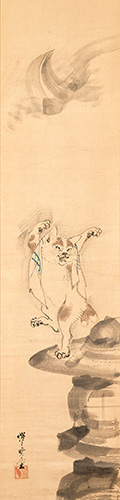
Kawanabe Kyōsai
1871-89.
Israel Goldman Collection, London.
Photo: Ken Adlard.
【To be shown over an entire period】
*First time on public display in Japan
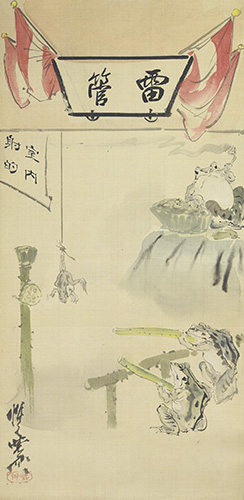
Kawanabe Kyōsai
c. 1871-76.
Israel Goldman Collection, London.
Photo: Art Research Center, Ritsumeikan University.
【To be shown over an entire period】
*First time on public display in Japan
Section 3
People
Kyōsai's human subjects include historical and legendary figures, as well as images of typical beautiful women; however, it is in his works referencing the society of his own time that the artist's keen interest in people is most visible.
This section presents works that reflect the fashions of the time: images of foreigners, evidencing a strong interest in things abroad; and shogakai, painting and calligraphy parties, which were commercial events where one could pay a fee to enter and ask participating artists to make a calligraphy or a painting on the spot. Kyōsai kept illustrated diaries (enikki) until his latest years and we find numerous images of him painting at shogakai, at more private gatherings called sekigakai and also in private situations at home, and at the house of his close pupil Josiah Conder.
Skeletons became a striking visual trope to represent inherent human foibles, such as hedonism, ingrained deeply 'into the bones' as one says in Japanese. There is also a painting in which people are shown with a long tengu nose. 'Being a tengu' (semi-human supernatural beings with long noses) is equivalent to 'pointing one's nose in the air' ― that is, being conceited.
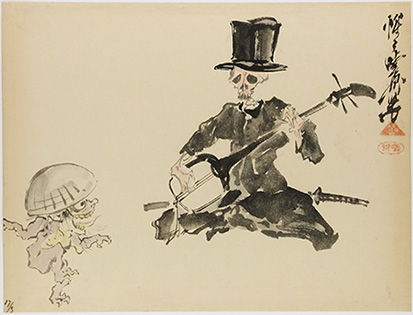
Kawanabe Kyōsai
1871-79.
Israel Goldman Collection, London.
Photo: Art Research Center, Ritsumeikan University.
【To be shown over an entire period】
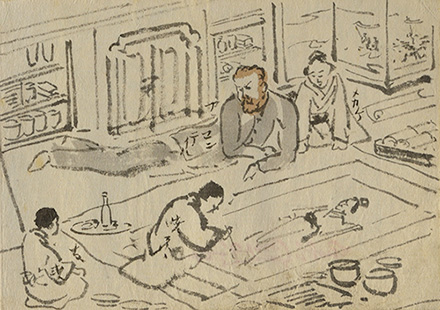
Kawanabe Kyōsai
1882-83.
Israel Goldman Collection, London.
Photo: Art Research Center, Ritsumeikan University.
【To be shown over an entire period (with scene change)】
(This scene is on display between Apr. 22 and May 18)
Section 4
Demons
Kyōsai took great pleasure in depicting various types of oni (demon): jailers of hell, demon attendants of Buddhist saints such as Rakan (Arhats), the Wind and Thunder Gods, Kaisei (the first star of the Big Dipper, represented as a devil figure), a demon in priest's clothing from Ōtsu-e folk paintings, evil spirits chased by Shōki, and ones driven away during the Tsuina ritual at the new year. There are some terrifying demonic figures in Kyōsai's works, like the ones in the tales of Shuten-dōji and of Ōmori Hikoshichi (a samurai of Nanboku-chō period), but most of his oni are comical and likeable.
Vices such as an inclination towards inebriation and carnality were considered part of their character. Kyōsai, with his own strong love of rice wine, seems to have identified with oni, and there is a sense of affinity in his images of the sake-loving demon from Ōtsu-e pictures and the little devils chastised by the Demon Queller Shōki.
Kyōsai's extraordinary talent and eccentric character were also described using the metaphor of his being 'demonic'. As a child, he received the nickname Gaki ('demon of painting', a homophone of 'kid') from his Kano-school teacher Maemura Tōwa. The artist's special attachment to demons can be sensed in many aspects of his work.
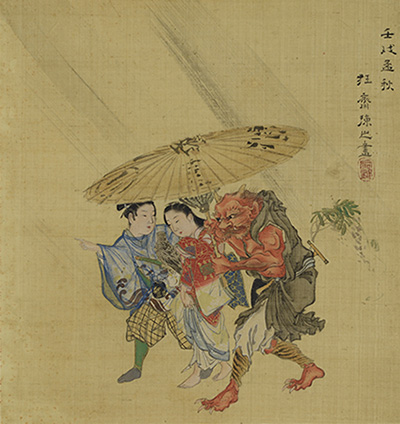
Kawanabe Kyōsai
1862.
Israel Goldman Collection, London.
Photo: Art Research Center, Ritsumeikan University.
【To be shown over an entire period】
*First time on public display in Japan
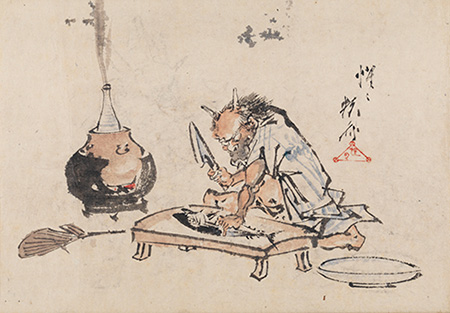
Kawanabe Kyōsai
c. 1865-70.
Israel Goldman Collection, London.
Photo: Ken Adlard.
【To be shown over an entire period】
*First time on public display in Japan
Section 5
The Divine
Around 1879, Kyōsai became a Buddhist disciple at Reiunji Temple in Yushima, Hongō, and began using the Buddhist name Jokū in addition to his other art names. Daruma (Bodhidharma), and the Bodhisattvas Kannon and Monju are the Buddhist icons the artist painted the most. In May, for the Boy's Day, it was customary to hang an image of Shōki, and Kyōsai received numerous commissions for this talismanic icon. The auspicious Seven Lucky Gods were also a popular and commercial subject.
At the same time, the artist featured these deities in his kyōga. The Seven Lucky Gods and Ofuku (also called Okame or Otafuku ― the female, plump-faced harbinger of happiness), were depicted in human-like ways, enjoying various secular activities.
One of the rare comic subjects in the academic Kano school's repertoire was Idai dōgi zu ― playful depictions of Buddhist and Daoist deities. Kyōsai produced works that follow the lineage of Idai dōgi zu as well as more radical versions which satirised contemporary society.
This section presents various ways in which the artist engaged with the divine, sometimes as icons for worship and sometimes as comic subjects.
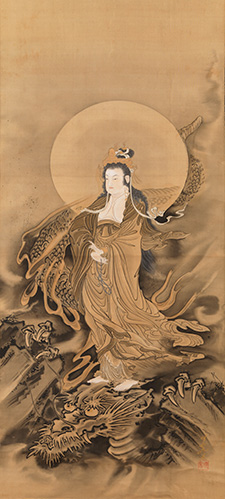
Kawanabe Kyōsai
1871-89.
Israel Goldman Collection, London.
Photo: Ken Adlard.
【To be shown over an entire period】
*First time on public display in Japan
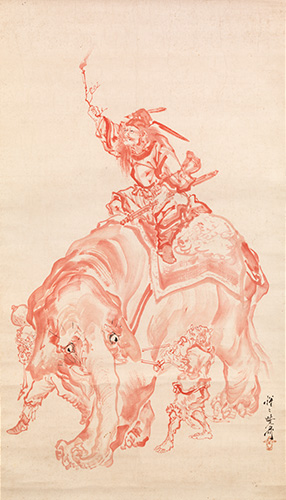
Kawanabe Kyōsai
Mid-1870s.
Israel Goldman Collection, London.
Photo: Ken Adlard.
【To be shown over an entire period】
*First time on public display in Japan
Section 6
Print Highlights
Kyōsai was primarily a painter, but he also designed a large number of ukiyo-e woodblock prints and illustrated books. In addition to topical and satirical prints which depicted contemporary society, Kyōsai also created many pictures for uchiwa ― non-folding, flat paper fans ― evidenced by a large number of remaining proof impressions.
It was from around 1863 that the artist started producing designs for satirical prints in earnest. This genre brought a sense of movement into his art, reflecting turbulent times of political upheaval. By entering into this new creative realm, the artist developed dynamic forms of expression deviating from the academic norms of the Kano school, with its inclination towards stable and static compositions. This also encouraged Kyōsai to focus on the here-and-now; whereas the traditional subjects of the Kano school ― myths, history, legends, auspicious and religious themes ― were more of a timeless nature.
One of the key strengths of the Goldman Collection is that it includes numerous prints in first or early impressions, and in superb condition, reflecting the professional eyes of the collector who is an art dealer specialising in ukiyo-e. There are also rare works, some unique, as well as designs which were hitherto unknown.
This section features exquisite examples from Mr. Goldman's print collection which attests to the collector's relentless pursuit of quality.
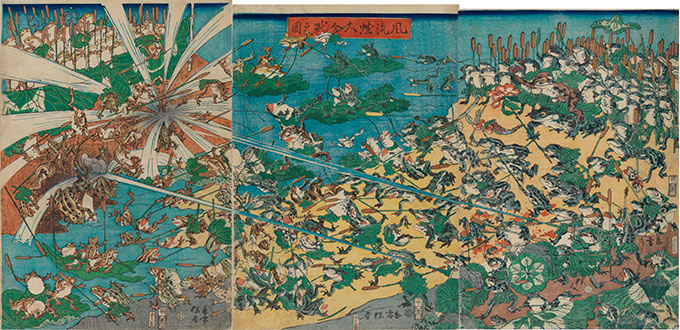
Kawanabe Kyōsai
Seventh month 1864.
Israel Goldman Collection, London. Photo: Ken Adlard.
【On display between Apr. 22 and May 18】
*First time on public display in Japan
*Unauthorized reproduction or use of texts or images from this site is prohibited.
2025 January
- Exhibition
- Closed
- Tea Ceremony
- Mon
- Tue
- Wed
- Thu
- Fri
- Sat
- Sun
- 1
- 2
- 3
- 4
- 5
- 6
- 7
- 8
- 9
- 10
- 11
- 12
- 13
- 14
- 15
- 16
- 17
- 18
- 19
- 20
- 21
- 22
- 23
- 24
- 25
- 26
- 27
- 28
- 29
- 30
- 31
2025 February
- Exhibition
- Closed
- Tea Ceremony
- Mon
- Tue
- Wed
- Thu
- Fri
- Sat
- Sun
- 1
- 2
- 3
- 4
- 5
- 6
- 7
- 8
- 9
- 10
- 11
- 12
- 13
- 14
- 15
- 16
- 17
- 18
- 19
- 20
- 21
- 22
- 23
- 24
- 25
- 26
- 27
- 28
2025 March
- Exhibition
- Closed
- Tea Ceremony
- Mon
- Tue
- Wed
- Thu
- Fri
- Sat
- Sun
- 1
- 2
- 3
- 4
- 5
- 6
- 7
- 8
- 9
- 10
- 11
- 12
- 13
- 14
- 15
- 16
- 17
- 18
- 19
- 20
- 21
- 22
- 23
- 24
- 25
- 26
- 27
- 28
- 29
- 30
- 31
2025 April
- Exhibition
- Closed
- Tea Ceremony
- Mon
- Tue
- Wed
- Thu
- Fri
- Sat
- Sun
- 1
- 2
- 3
- 4
- 5
- 6
- 7
- 8
- 9
- 10
- 11
- 12
- 13
- 14
- 15
- 16
- 17
- 18
- 19
- 20
- 21
- 22
- 23
- 24
- 25
- 26
- 27
- 28
- 29
- 30
2025 May
- Exhibition
- Closed
- Tea Ceremony
- Mon
- Tue
- Wed
- Thu
- Fri
- Sat
- Sun
- 1
- 2
- 3
- 4
- 5
- 6
- 7
- 8
- 9
- 10
- 11
- 12
- 13
- 14
- 15
- 16
- 17
- 18
- 19
- 20
- 21
- 22
- 23
- 24
- 25
- 26
- 27
- 28
- 29
- 30
- 31
2025 June
- Exhibition
- Closed
- Tea Ceremony
- Mon
- Tue
- Wed
- Thu
- Fri
- Sat
- Sun
- 1
- 2
- 3
- 4
- 5
- 6
- 7
- 8
- 9
- 10
- 11
- 12
- 13
- 14
- 15
- 16
- 17
- 18
- 19
- 20
- 21
- 22
- 23
- 24
- 25
- 26
- 27
- 28
- 29
- 30
2025 July
- Exhibition
- Closed
- Tea Ceremony
- Mon
- Tue
- Wed
- Thu
- Fri
- Sat
- Sun
- 1
- 2
- 3
- 4
- 5
- 6
- 7
- 8
- 9
- 10
- 11
- 12
- 13
- 14
- 15
- 16
- 17
- 18
- 19
- 20
- 21
- 22
- 23
- 24
- 25
- 26
- 27
- 28
- 29
- 30
- 31
2025 August
- Exhibition
- Closed
- Tea Ceremony
- Mon
- Tue
- Wed
- Thu
- Fri
- Sat
- Sun
- 1
- 2
- 3
- 4
- 5
- 6
- 7
- 8
- 9
- 10
- 11
- 12
- 13
- 14
- 15
- 16
- 17
- 18
- 19
- 20
- 21
- 22
- 23
- 24
- 25
- 26
- 27
- 28
- 29
- 30
- 31
2025 September
- Exhibition
- Closed
- Tea Ceremony
- Mon
- Tue
- Wed
- Thu
- Fri
- Sat
- Sun
- 1
- 2
- 3
- 4
- 5
- 6
- 7
- 8
- 9
- 10
- 11
- 12
- 13
- 14
- 15
- 16
- 17
- 18
- 19
- 20
- 21
- 22
- 23
- 24
- 25
- 26
- 27
- 28
- 29
- 30
2025 October
- Exhibition
- Closed
- Tea Ceremony
- Mon
- Tue
- Wed
- Thu
- Fri
- Sat
- Sun
- 1
- 2
- 3
- 4
- 5
- 6
- 7
- 8
- 9
- 10
- 11
- 12
- 13
- 14
- 15
- 16
- 17
- 18
- 19
- 20
- 21
- 22
- 23
- 24
- 25
- 26
- 27
- 28
- 29
- 30
- 31
2025 November
- Exhibition
- Closed
- Tea Ceremony
- Mon
- Tue
- Wed
- Thu
- Fri
- Sat
- Sun
- 1
- 2
- 3
- 4
- 5
- 6
- 7
- 8
- 9
- 10
- 11
- 12
- 13
- 14
- 15
- 16
- 17
- 18
- 19
- 20
- 21
- 22
- 23
- 24
- 25
- 26
- 27
- 28
- 29
- 30
2025 December
- Exhibition
- Closed
- Tea Ceremony
- Mon
- Tue
- Wed
- Thu
- Fri
- Sat
- Sun
- 1
- 2
- 3
- 4
- 5
- 6
- 7
- 8
- 9
- 10
- 11
- 12
- 13
- 14
- 15
- 16
- 17
- 18
- 19
- 20
- 21
- 22
- 23
- 24
- 25
- 26
- 27
- 28
- 29
- 30
- 31
2026 January
- Exhibition
- Closed
- Tea Ceremony
- Mon
- Tue
- Wed
- Thu
- Fri
- Sat
- Sun
- 1
- 2
- 3
- 4
- 5
- 6
- 7
- 8
- 9
- 10
- 11
- 12
- 13
- 14
- 15
- 16
- 17
- 18
- 19
- 20
- 21
- 22
- 23
- 24
- 25
- 26
- 27
- 28
- 29
- 30
- 31
2026 February
- Exhibition
- Closed
- Mon
- Tue
- Wed
- Thu
- Fri
- Sat
- Sun
- 1
- 2
- 3
- 4
- 5
- 6
- 7
- 8
- 9
- 10
- 11
- 12
- 13
- 14
- 15
- 16
- 17
- 18
- 19
- 20
- 21
- 22
- 23
- 24
- 25
- 26
- 27
- 28
2026 March
- Exhibition
- Closed
- Mon
- Tue
- Wed
- Thu
- Fri
- Sat
- Sun
- 1
- 2
- 3
- 4
- 5
- 6
- 7
- 8
- 9
- 10
- 11
- 12
- 13
- 14
- 15
- 16
- 17
- 18
- 19
- 20
- 21
- 22
- 23
- 24
- 25
- 26
- 27
- 28
- 29
- 30
- 31
2026 April
- Exhibition
- Closed
- Mon
- Tue
- Wed
- Thu
- Fri
- Sat
- Sun
- 1
- 2
- 3
- 4
- 5
- 6
- 7
- 8
- 9
- 10
- 11
- 12
- 13
- 14
- 15
- 16
- 17
- 18
- 19
- 20
- 21
- 22
- 23
- 24
- 25
- 26
- 27
- 28
- 29
- 30
2026 May
- Exhibition
- Closed
- Mon
- Tue
- Wed
- Thu
- Fri
- Sat
- Sun
- 1
- 2
- 3
- 4
- 5
- 6
- 7
- 8
- 9
- 10
- 11
- 12
- 13
- 14
- 15
- 16
- 17
- 18
- 19
- 20
- 21
- 22
- 23
- 24
- 25
- 26
- 27
- 28
- 29
- 30
- 31
2026 June
- Exhibition
- Closed
- Mon
- Tue
- Wed
- Thu
- Fri
- Sat
- Sun
- 1
- 2
- 3
- 4
- 5
- 6
- 7
- 8
- 9
- 10
- 11
- 12
- 13
- 14
- 15
- 16
- 17
- 18
- 19
- 20
- 21
- 22
- 23
- 24
- 25
- 26
- 27
- 28
- 29
- 30
2026 July
- Exhibition
- Closed
- Mon
- Tue
- Wed
- Thu
- Fri
- Sat
- Sun
- 1
- 2
- 3
- 4
- 5
- 6
- 7
- 8
- 9
- 10
- 11
- 12
- 13
- 14
- 15
- 16
- 17
- 18
- 19
- 20
- 21
- 22
- 23
- 24
- 25
- 26
- 27
- 28
- 29
- 30
- 31
2026 August
- Exhibition
- Closed
- Mon
- Tue
- Wed
- Thu
- Fri
- Sat
- Sun
- 1
- 2
- 3
- 4
- 5
- 6
- 7
- 8
- 9
- 10
- 11
- 12
- 13
- 14
- 15
- 16
- 17
- 18
- 19
- 20
- 21
- 22
- 23
- 24
- 25
- 26
- 27
- 28
- 29
- 30
- 31
2026 September
- Exhibition
- Closed
- Mon
- Tue
- Wed
- Thu
- Fri
- Sat
- Sun
- 1
- 2
- 3
- 4
- 5
- 6
- 7
- 8
- 9
- 10
- 11
- 12
- 13
- 14
- 15
- 16
- 17
- 18
- 19
- 20
- 21
- 22
- 23
- 24
- 25
- 26
- 27
- 28
- 29
- 30
2026 October
- Exhibition
- Closed
- Mon
- Tue
- Wed
- Thu
- Fri
- Sat
- Sun
- 1
- 2
- 3
- 4
- 5
- 6
- 7
- 8
- 9
- 10
- 11
- 12
- 13
- 14
- 15
- 16
- 17
- 18
- 19
- 20
- 21
- 22
- 23
- 24
- 25
- 26
- 27
- 28
- 29
- 30
- 31
2026 November
- Exhibition
- Closed
- Mon
- Tue
- Wed
- Thu
- Fri
- Sat
- Sun
- 1
- 2
- 3
- 4
- 5
- 6
- 7
- 8
- 9
- 10
- 11
- 12
- 13
- 14
- 15
- 16
- 17
- 18
- 19
- 20
- 21
- 22
- 23
- 24
- 25
- 26
- 27
- 28
- 29
- 30
2026 December
- Exhibition
- Closed
- Mon
- Tue
- Wed
- Thu
- Fri
- Sat
- Sun
- 1
- 2
- 3
- 4
- 5
- 6
- 7
- 8
- 9
- 10
- 11
- 12
- 13
- 14
- 15
- 16
- 17
- 18
- 19
- 20
- 21
- 22
- 23
- 24
- 25
- 26
- 27
- 28
- 29
- 30
- 31
