
- Calendar
- Online Ticket Sales
- Access
- JA
- EN
Masterpieces from the Itsuo Art Museum Collection: Buson, Go Shun, and the Art of Tea
September 16 to November 8, 2026
*There will be an exhibition change during the course of exhibition.
*Download the list of changes in works on display
*Photography is permitted for some works in this exhibition. Please refer to the venue guide for details.
The list of changes in worksPDF
*The order of sections may change at the exhibition venue.
Section 1
Antique Calligraphy and Buddhist Sutra Scrolls
Kohitsugire, old calligraphy fragments, are detached segments from scrolls and books with superb calligraphy by the ancients, who expressed themselves in waka poetry and other literary forms. Many are mounted as hanging scrolls or pasted in albums or on folding screens, for their appreciation. The beauty of the elegant kana characters on the gorgeous decorative ryoshi paper resonates with the courtly world of waka. Many works reflecting a sense of sophisticated aesthetics were produced during the Heian period. The collection also includes a substantial number of hand-copied sutras produced in Japan, including the Lankavatara Sutra, the Eyeless Sutra, and the Buddhist Iconographic Drawings and Notes in Ten Scrolls, further evidence of the magnificence of the collection.
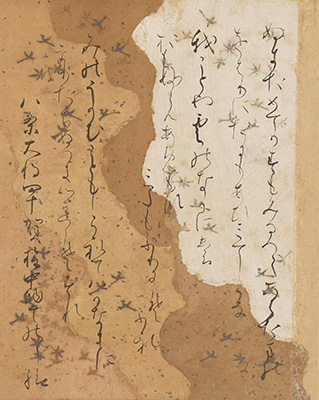
Attributed to Fujiwara no Kinto,
Hanging scroll, Heian Period, 12th century
Itsuo Art Museum, Hankyu Culture Foundation
【On display between Sep. 16 and Oct. 12】
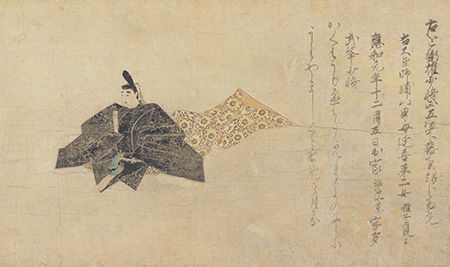
Painting attributed to Fujiwara no Nobuzane, calligraphy attributed to Go-Kyogoku Yoshitsune,
Hanging scroll, Kamakura Period, 13th century,
Itsuo Art Museum, Hankyu Culture Foundation
【On display between Oct. 14 and Nov. 8】
Section 2
Medieval and Early Modern Paintings and Craft Objects
Ichizo also directed his gaze, in his search for beauty, to many eras from the medieval to the beginning of the early modern (Edo) period. The collection includes many superb works, including illustrated narrative paintings on subjects that continued to be depicted from the medieval period on. The tale of Ashibiki, a Muromachi-period picture scroll depicting chigo monogatari (Buddhist acolyte tales), is a signature example.
Toyotomi Hideyoshi is a work that shows us a familiar face. It is a valuable preparatory drawing, the basis for the many paintings of Hideyoshi produced after his death and deification as Toyokuni Daimyojin. The Sanjusangen-do Archery Contest and the tale of Tsuyudono are vivid depictions of lifestyles and customs in the capital at that time.
In the crafts, in addition to traditional inkstone cases from the medieval period, the collection includes works that tell us of cultural exchanges between Japan and other lands, such as Chinese lacquerware, treasured as karamono, and Nanban lacquerware, made in Japan for export. These objects enhance the cultural significance of the collection.
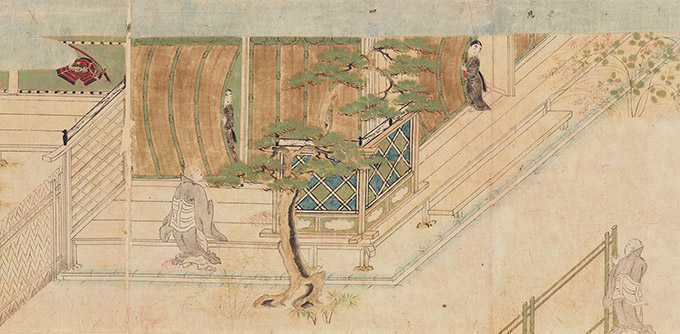
1 of 5 handscrolls, Muromachi Period, 15th century,
Itsuo Art Museum, Hankyu Culture Foundation
【To be shown over an entire period (with scene change)】
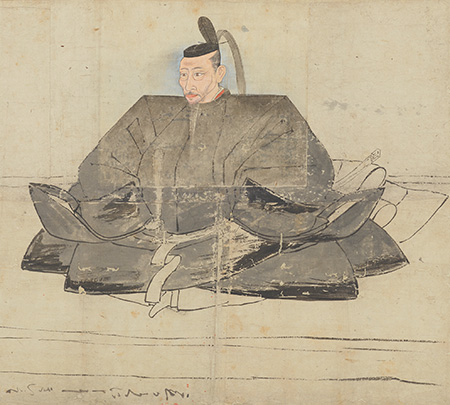
Kano Mitsunobu, Hanging scroll, Momoyama Period, 16th century,
Itsuo Art Museum, Hankyu Culture Foundation
【On display between Sep. 16 and Oct. 12】
Section 3
Buson and Go Shun: Schools of Painting in the Early Modern Period
A group of masterpieces by Yosa Buson (1716–1783) and Go Shun (1752–1811), artists active in the eighteenth century, are the core of the collection. Buson, famous as a haikai poet, brilliantly integrated the fascination of calligraphy and pictures in his haiga paintings, in which he combined his haiku and witty paintings. His Narrow Road to the Deep North Picture Scroll, which combines his copy of Matsuo Basho’s poetic travelogue, Narrow Road to the Deep North, with paintings added, is the culmination of his haiga.
White Plum Blossoms painted by Go Shun (Matsumura Gekkei), who had been Buson’s student, is a masterpiece that epitomizes the Go Shun collection at the Itsuo Art Museum. In addition, the collection features a rich selection of works by Maruyama Okyo, whom Go Shun studied under after Buson’s death, as well as Okyo’s disciple Nagasawa Rosetsu and Matsumura Keibun, who carried on the Shijo school established by Go Shun. The rivalry between Edo art works by the highly individual Tani Buncho and Mori Sosen is not to be missed.
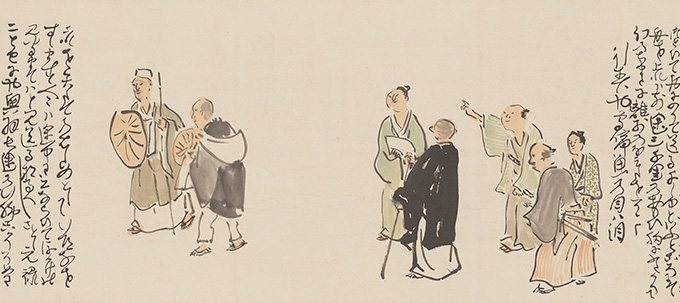
Yosa Buson, 2 handscrolls, An’ei 8, 1779,
Itsuo Art Museum, Hankyu Culture Foundation
【To be shown over an entire period (with scene change)】
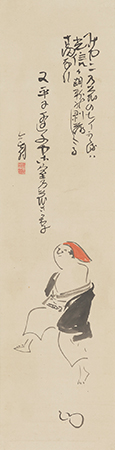
Yosa Buson, Hanging scroll, Edo Period, 18th century,
Itsuo Art Museum, Hankyu Culture Foundation
【On display between Oct. 14 and Nov. 8】
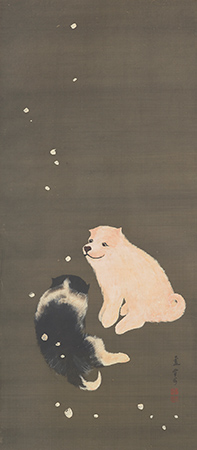
Nagasawa Rosetsu, Hanging scroll, Edo Period, 18th century,
Itsuo Art Museum, Hankyu Culture Foundation
【On display between Oct. 14 and Nov. 8】
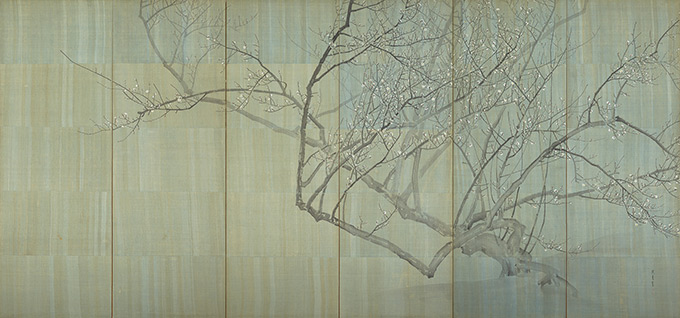
Go Shun, Right screen of a Pair of six-panel folding screens, Edo Period, 18th century,
Itsuo Art Museum, Hankyu Culture Foundation
【To be shown over an entire period】
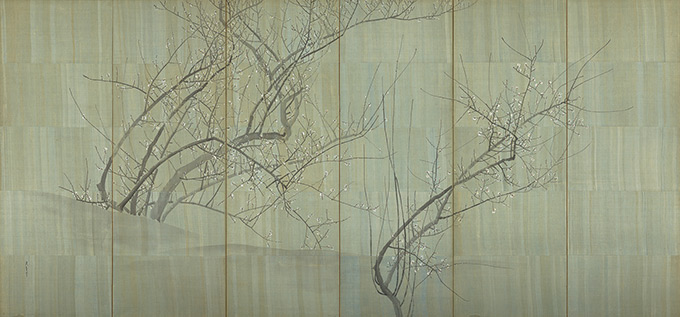
Go Shun, Left screen of a Pair of six-panel folding screens, Edo Period, 18th century,
Itsuo Art Museum, Hankyu Culture Foundation
【To be shown over an entire period】
Section 4
Itsuo’s Tea Utensils
Ichizo cultivated a wide network of relationships, both as a businessman and as a tea master, hosting tea gatherings where he and his guests enjoyed carefully curated combinations of his prized utensils. The tea containers, tea bowls, flower vases, water jars, and other implements chosen by Ichizo’s discerning aesthetic eye were all vessels he favored for use in such gatherings. Unbound by conventional traditions, Ichizo also created tea rooms with chair seating. During his travels abroad, he actively acquired Western ceramics and glassware, bringing them back to Japan and repurposing them as tea utensils, thereby adding a vibrant touch to his tea gatherings. He further experimented with kaiseki cuisine by incorporating dishes such as rice bowls and even Western-style food, proposing new possibilities for the practice of chanoyu.
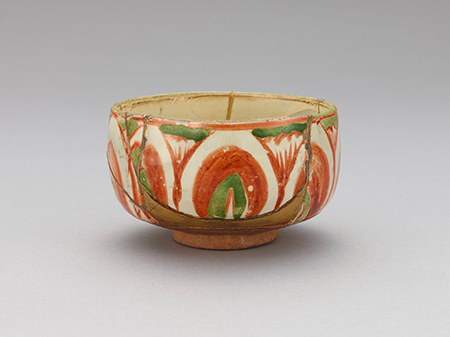
Yuan Period, 13th century,
Itsuo Art Museum, Hankyu Culture Foundation
【To be shown over an entire period】
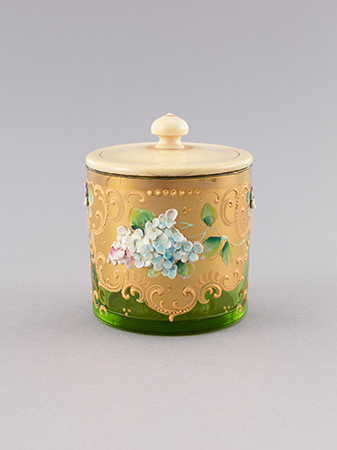
Italy, 18th century,
Itsuo Art Museum, Hankyu Culture Foundation
【To be shown over an entire period】
Section 5
Modern Artists and Itsuo
Ichizo’s connoisseurship was not confined to appreciating masterpieces from the past; he also actively cultivated relationships with painters and craft artists of his own time. The museum’s collection includes numerous works by the painter Suzuki Kason (1860–1919) and the lacquer artist Misago Ryosai (1887–1975), suggesting how closely their works aligned with Ichizo’s aesthetic preferences. The piece titled Natsume with “Hinamatsuri” Musical Score Design in Maki-e on Black Ground, features, at the junction of the lid and body, a maki-e design based on the musical score of Hinamatsuri, a Takarazuka Revue production created by Ichizo himself. This original tea utensil was commissioned by Ichizo and executed by Ryosai.
There are many anecdotes about Ichizo’s associations with artists, including Kitaoji Rosanjin (1883–1959), Kawai Kanjiro (1890–1966), and Yosano Akiko (1878–1942).
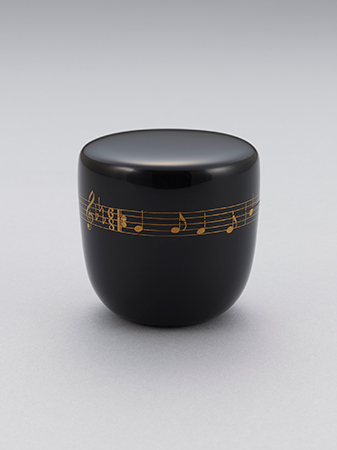
Misago Ryosai, Showa 8, 1933,
Itsuo Art Museum, Hankyu Culture Foundation
【To be shown over an entire period】
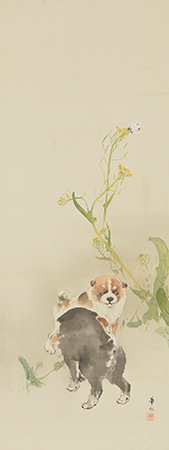
Suzuki Kason, Hanging scroll, Meiji 39, 1906,
Itsuo Art Museum, Hankyu Culture Foundation
【On display between Sep. 16 and Oct. 12】
Section 6
The Life of Itsuo—Kobayashi Ichizo—
in the Meiji, Taisho, and Showa Periods
Kobayashi Ichizo (Itsuo) was a man of diverse aspects. He built the Hankyu Corporation, opened the Hankyu Department Store, founded the Takarazuka Revue, and gave the world Toho Studios. He served as a cabinet minister twice, rebuilt a host of companies, and was also deeply engaged with the world of tea and made many friendly relationships. This section traces his achievements in a variety of fields, throughout his life in the Meiji, Taisho, and Showa periods, to explore what influenced the formation of his collection.
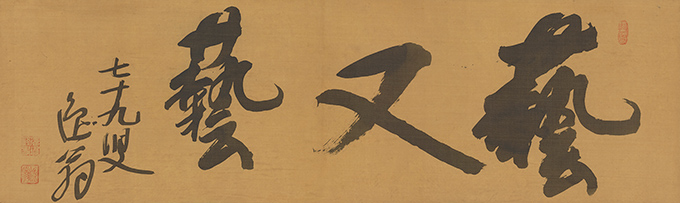
Kobayashi Ichizo, Panel, Showa 27, 1952,
Itsuo Art Museum, Hankyu Culture Foundation
【To be shown over an entire period】
*Unauthorized reproduction or use of texts or images from this site is prohibited.
2025 January
- Exhibition
- Closed
- Tea Ceremony
- Mon
- Tue
- Wed
- Thu
- Fri
- Sat
- Sun
- 1
- 2
- 3
- 4
- 5
- 6
- 7
- 8
- 9
- 10
- 11
- 12
- 13
- 14
- 15
- 16
- 17
- 18
- 19
- 20
- 21
- 22
- 23
- 24
- 25
- 26
- 27
- 28
- 29
- 30
- 31
2025 February
- Exhibition
- Closed
- Tea Ceremony
- Mon
- Tue
- Wed
- Thu
- Fri
- Sat
- Sun
- 1
- 2
- 3
- 4
- 5
- 6
- 7
- 8
- 9
- 10
- 11
- 12
- 13
- 14
- 15
- 16
- 17
- 18
- 19
- 20
- 21
- 22
- 23
- 24
- 25
- 26
- 27
- 28
2025 March
- Exhibition
- Closed
- Tea Ceremony
- Mon
- Tue
- Wed
- Thu
- Fri
- Sat
- Sun
- 1
- 2
- 3
- 4
- 5
- 6
- 7
- 8
- 9
- 10
- 11
- 12
- 13
- 14
- 15
- 16
- 17
- 18
- 19
- 20
- 21
- 22
- 23
- 24
- 25
- 26
- 27
- 28
- 29
- 30
- 31
2025 April
- Exhibition
- Closed
- Tea Ceremony
- Mon
- Tue
- Wed
- Thu
- Fri
- Sat
- Sun
- 1
- 2
- 3
- 4
- 5
- 6
- 7
- 8
- 9
- 10
- 11
- 12
- 13
- 14
- 15
- 16
- 17
- 18
- 19
- 20
- 21
- 22
- 23
- 24
- 25
- 26
- 27
- 28
- 29
- 30
2025 May
- Exhibition
- Closed
- Tea Ceremony
- Mon
- Tue
- Wed
- Thu
- Fri
- Sat
- Sun
- 1
- 2
- 3
- 4
- 5
- 6
- 7
- 8
- 9
- 10
- 11
- 12
- 13
- 14
- 15
- 16
- 17
- 18
- 19
- 20
- 21
- 22
- 23
- 24
- 25
- 26
- 27
- 28
- 29
- 30
- 31
2025 June
- Exhibition
- Closed
- Tea Ceremony
- Mon
- Tue
- Wed
- Thu
- Fri
- Sat
- Sun
- 1
- 2
- 3
- 4
- 5
- 6
- 7
- 8
- 9
- 10
- 11
- 12
- 13
- 14
- 15
- 16
- 17
- 18
- 19
- 20
- 21
- 22
- 23
- 24
- 25
- 26
- 27
- 28
- 29
- 30
2025 July
- Exhibition
- Closed
- Tea Ceremony
- Mon
- Tue
- Wed
- Thu
- Fri
- Sat
- Sun
- 1
- 2
- 3
- 4
- 5
- 6
- 7
- 8
- 9
- 10
- 11
- 12
- 13
- 14
- 15
- 16
- 17
- 18
- 19
- 20
- 21
- 22
- 23
- 24
- 25
- 26
- 27
- 28
- 29
- 30
- 31
2025 August
- Exhibition
- Closed
- Tea Ceremony
- Mon
- Tue
- Wed
- Thu
- Fri
- Sat
- Sun
- 1
- 2
- 3
- 4
- 5
- 6
- 7
- 8
- 9
- 10
- 11
- 12
- 13
- 14
- 15
- 16
- 17
- 18
- 19
- 20
- 21
- 22
- 23
- 24
- 25
- 26
- 27
- 28
- 29
- 30
- 31
2025 September
- Exhibition
- Closed
- Tea Ceremony
- Mon
- Tue
- Wed
- Thu
- Fri
- Sat
- Sun
- 1
- 2
- 3
- 4
- 5
- 6
- 7
- 8
- 9
- 10
- 11
- 12
- 13
- 14
- 15
- 16
- 17
- 18
- 19
- 20
- 21
- 22
- 23
- 24
- 25
- 26
- 27
- 28
- 29
- 30
2025 October
- Exhibition
- Closed
- Tea Ceremony
- Mon
- Tue
- Wed
- Thu
- Fri
- Sat
- Sun
- 1
- 2
- 3
- 4
- 5
- 6
- 7
- 8
- 9
- 10
- 11
- 12
- 13
- 14
- 15
- 16
- 17
- 18
- 19
- 20
- 21
- 22
- 23
- 24
- 25
- 26
- 27
- 28
- 29
- 30
- 31
2025 November
- Exhibition
- Closed
- Tea Ceremony
- Mon
- Tue
- Wed
- Thu
- Fri
- Sat
- Sun
- 1
- 2
- 3
- 4
- 5
- 6
- 7
- 8
- 9
- 10
- 11
- 12
- 13
- 14
- 15
- 16
- 17
- 18
- 19
- 20
- 21
- 22
- 23
- 24
- 25
- 26
- 27
- 28
- 29
- 30
2025 December
- Exhibition
- Closed
- Tea Ceremony
- Mon
- Tue
- Wed
- Thu
- Fri
- Sat
- Sun
- 1
- 2
- 3
- 4
- 5
- 6
- 7
- 8
- 9
- 10
- 11
- 12
- 13
- 14
- 15
- 16
- 17
- 18
- 19
- 20
- 21
- 22
- 23
- 24
- 25
- 26
- 27
- 28
- 29
- 30
- 31
2026 January
- Exhibition
- Closed
- Tea Ceremony
- Mon
- Tue
- Wed
- Thu
- Fri
- Sat
- Sun
- 1
- 2
- 3
- 4
- 5
- 6
- 7
- 8
- 9
- 10
- 11
- 12
- 13
- 14
- 15
- 16
- 17
- 18
- 19
- 20
- 21
- 22
- 23
- 24
- 25
- 26
- 27
- 28
- 29
- 30
- 31
2026 February
- Exhibition
- Closed
- Mon
- Tue
- Wed
- Thu
- Fri
- Sat
- Sun
- 1
- 2
- 3
- 4
- 5
- 6
- 7
- 8
- 9
- 10
- 11
- 12
- 13
- 14
- 15
- 16
- 17
- 18
- 19
- 20
- 21
- 22
- 23
- 24
- 25
- 26
- 27
- 28
2026 March
- Exhibition
- Closed
- Mon
- Tue
- Wed
- Thu
- Fri
- Sat
- Sun
- 1
- 2
- 3
- 4
- 5
- 6
- 7
- 8
- 9
- 10
- 11
- 12
- 13
- 14
- 15
- 16
- 17
- 18
- 19
- 20
- 21
- 22
- 23
- 24
- 25
- 26
- 27
- 28
- 29
- 30
- 31
2026 April
- Exhibition
- Closed
- Mon
- Tue
- Wed
- Thu
- Fri
- Sat
- Sun
- 1
- 2
- 3
- 4
- 5
- 6
- 7
- 8
- 9
- 10
- 11
- 12
- 13
- 14
- 15
- 16
- 17
- 18
- 19
- 20
- 21
- 22
- 23
- 24
- 25
- 26
- 27
- 28
- 29
- 30
2026 May
- Exhibition
- Closed
- Mon
- Tue
- Wed
- Thu
- Fri
- Sat
- Sun
- 1
- 2
- 3
- 4
- 5
- 6
- 7
- 8
- 9
- 10
- 11
- 12
- 13
- 14
- 15
- 16
- 17
- 18
- 19
- 20
- 21
- 22
- 23
- 24
- 25
- 26
- 27
- 28
- 29
- 30
- 31
2026 June
- Exhibition
- Closed
- Mon
- Tue
- Wed
- Thu
- Fri
- Sat
- Sun
- 1
- 2
- 3
- 4
- 5
- 6
- 7
- 8
- 9
- 10
- 11
- 12
- 13
- 14
- 15
- 16
- 17
- 18
- 19
- 20
- 21
- 22
- 23
- 24
- 25
- 26
- 27
- 28
- 29
- 30
2026 July
- Exhibition
- Closed
- Mon
- Tue
- Wed
- Thu
- Fri
- Sat
- Sun
- 1
- 2
- 3
- 4
- 5
- 6
- 7
- 8
- 9
- 10
- 11
- 12
- 13
- 14
- 15
- 16
- 17
- 18
- 19
- 20
- 21
- 22
- 23
- 24
- 25
- 26
- 27
- 28
- 29
- 30
- 31
2026 August
- Exhibition
- Closed
- Mon
- Tue
- Wed
- Thu
- Fri
- Sat
- Sun
- 1
- 2
- 3
- 4
- 5
- 6
- 7
- 8
- 9
- 10
- 11
- 12
- 13
- 14
- 15
- 16
- 17
- 18
- 19
- 20
- 21
- 22
- 23
- 24
- 25
- 26
- 27
- 28
- 29
- 30
- 31
2026 September
- Exhibition
- Closed
- Mon
- Tue
- Wed
- Thu
- Fri
- Sat
- Sun
- 1
- 2
- 3
- 4
- 5
- 6
- 7
- 8
- 9
- 10
- 11
- 12
- 13
- 14
- 15
- 16
- 17
- 18
- 19
- 20
- 21
- 22
- 23
- 24
- 25
- 26
- 27
- 28
- 29
- 30
2026 October
- Exhibition
- Closed
- Mon
- Tue
- Wed
- Thu
- Fri
- Sat
- Sun
- 1
- 2
- 3
- 4
- 5
- 6
- 7
- 8
- 9
- 10
- 11
- 12
- 13
- 14
- 15
- 16
- 17
- 18
- 19
- 20
- 21
- 22
- 23
- 24
- 25
- 26
- 27
- 28
- 29
- 30
- 31
2026 November
- Exhibition
- Closed
- Mon
- Tue
- Wed
- Thu
- Fri
- Sat
- Sun
- 1
- 2
- 3
- 4
- 5
- 6
- 7
- 8
- 9
- 10
- 11
- 12
- 13
- 14
- 15
- 16
- 17
- 18
- 19
- 20
- 21
- 22
- 23
- 24
- 25
- 26
- 27
- 28
- 29
- 30
2026 December
- Exhibition
- Closed
- Mon
- Tue
- Wed
- Thu
- Fri
- Sat
- Sun
- 1
- 2
- 3
- 4
- 5
- 6
- 7
- 8
- 9
- 10
- 11
- 12
- 13
- 14
- 15
- 16
- 17
- 18
- 19
- 20
- 21
- 22
- 23
- 24
- 25
- 26
- 27
- 28
- 29
- 30
- 31
